Almost There

The important election season is here. No, I’m not a week off or 4 years ahead of my time. I’m not talking about the recent US election, I’m talking about one that is upon us in PASS.

In the past few weeks I’ve blogged about my speaker preparation timelines here and here. Tomorrow morning, the pedal hits the metal and I’m doing a live panel discussion on PowerShell with some great panelists. And then in the afternoon my pre-recorded session on PowerShell for DBA Beginners will be broadcast with me doing a live Q&A afterwards. I hope you can join me for both.

Over the past few months I’ve been promoting the SQL PASS Virtual Summit. I’ve tried to get as many folks to sign up as I can, but honestly, I’m not sure I made much of a difference. Most of the folks I know had already made up their minds. But I didn’t stop. I even was promoting it at my User Group last night. And I’ll say now, it’s still not too late to sign up if you want.

I truly do think that PASS Summit is one of the great things our community does.

But…

Yes, there had to be a but here. I’m not happy, and from the blogs, tweets, and private comments about I’ve heard, neither are a lot of a other people. We have to be honest. COVID and going virtual has hurt PASS in several ways, but very much financially. There may not BE a PASS in the future if things don’t change. Some folks want to put the blame at the feet of C&C, the organization PASS pays to manage its daily affairs. Others put their blame elsewhere. There are many recriminations and attempts at casting blame. I don’t want to dwell on that, other than to say often I think it’s misplaced and can be hurtful.

Let me start by saying that I don’t think anyone, on the board, at C&C, or otherwise is acting in bad faith or ill will. I know many of the people involved and I truly think they’re good people who mean well.

But, that said, I think things have to change. Initially I thought about running for the board, but honestly, didn’t have the time to do the research and background gathering I wanted to before I could submit my application to the nomination committee. I reached out to several of my peers and colleagues for their thoughts and received a lot of useful feedback. But the long and short is, I’m not running. Perhaps next year. However, that doesn’t mean I can’t help effect change. Nor does it mean you can’t either.

We can effect change by voting for who we want on the PASS Board for next year. The list is here at the bottom. Steve Jones also has a quick blog listing them and other links. Rather than reproduce what he wrote, use the link above.

Just like in the US elections, I think it behooves oneself to participate as fully as possible and that means doing your research on candidates and actually voting. I’m not going to make recommendations here. In part because I still have to do the first part and do more research. But I can say this much, though I’m not running this year, I am certainly voting this year. PASS is very valuable to me and I want to see it be the best organization it can be and to do that, I think it needs to change and I hope to see it change for the better.

So, I’ve promoted Summit, I’ve prepared my presentations, I’ve kept my User Group informed. And shortly I will do the last bit for this year, and vote. I hope you do to next year.

And in closing, I’m going to steal a line generally said at Passover: Next year in Seattle! In the original it’s a call for hope to meet again in Jerusalem and in that spirit I truly hope to be among my friends and family next year in person, be it Seattle, Houston, or another city.

Speaker’s Timeline Part II

This is a follow-up to my first part. But before I dig into it, I want to thank all the readers who check in on my post last week. I had the best week ever in blogging. And I’ll admit, while my ego was pleased with the numbers, I think what really warmed me heart was the number of my fellow #SQLFamily members who retweeted, shared, or gave positive comments about it. Thanks.

So, back to my speaking timeline. On November 11th I’m giving my presentation on PowerShell for DBA Beginners at 2:00 PM EST. I’d be thrilled if you joined me.

So, last time I wrote about this, I had ended with what my next steps would be.

October 20th around 10:00 PM EDT

Upload final version of slide deck. Yes, I could probably improve upon it (and looking back now, there’s 1-2 slides I’d probably like to fix, but oh well).

October 20th – 10:44 PM EDT

Confirmation email: slides were received. Excellent!

October 21st – Midday

One more run through. Basically nail it at right around 0:58. But now really worried, what happens if I finish early before the live Q&A? Will there be 2 minutes of dead air?

October 22nd-24th

Do nothing. I deserve a break. Right? Right?

October 25th – Late Afternoon

Record my presentation with Zoom. It’s acceptable, but I made a mistake or two. Worst case, if I run out of time, I can use this, but honestly, I want a redo. But, like a good dba, I basically have a contingency plan in place in case I don’t get time to do a redo.

October 26th – Morning

Decide to use OBS to record, in part so I can include a window of me talking. I think it’ll be a bit more personal and interactive than simply having slides and a demo with a faceless voice talking.

October 26th – Morning 30 minutes later

What was I thinking? Why go through all this trouble. This is more work than I want to deal with today.

October 26th – Morning 45 minutes later

Ok, this just might work! I’ve figured out how to get the overlay the way I want, but gave up on green-screening me against a background, but that’s ok because the thumbnail video is small enough my background is not distracting.

October 26th – Morning 1:00:08 later

This recording is nearly perfect. I think it ran over by about 8 seconds, but if they cut that, it won’t hurt anything. Honestly, I’d ilke one more try, but I can’t stand the thought of listening to my own voice one more time.

October 26th – Late afternoon

Wait until the kids are done with school Zooms and my wife has no more meetings to start the upload.

October 26th – an hour later

Hmm, seems stuck. Do I wait or start over?

October 27th – an hour and 5 minutes later

PASS Virtual Summit 2020 – ‘Upload Video’ Upload Confirmation email arrives.

Excellent!

October 27th – an hour and 6 minutes later

Tweet about it!

Since Then

Several of my #SQLFamily members admit, some publicly, some in private that they missed the deadlines or at least feel better that they’re running as late as me. I feel for them and I’m glad that my timeline and tweets made them feel better about their own timelines.

Up until I had finally submitted my video, I had put off watching any other presenters talk about PowerShell. But now that I’ve submitted my video, I’ve decided to relax that rule and watch at least one other presentation on an introduction to PowerShell and start to think, “why didn’t I bring that up? Hmm, he’s got a good point there. Hmm, I should have covered that.” I start to have doubts about whether my presentation will hit the mark. But fortunately, upon further reflection I realize the other presenter took a different tack than I did and mine has a focus he doesn’t. Someone watching both will actually get useful information from each of these. Now I’m feeling better. In fact, feeling great because I think this is the way it should be, multiple paths to the same end point that can broaden your horizons. And given the time limitations there’s only so much any presenter can cover in a limited amount of time.

That said, I realize that Rob Sewell is doing a full-day pre-con called Introduction to PowerShell. I’m curious what he’ll cover and both am jealous he has a full-day to do this and thankful I didn’t have to come up with a full-day’s worth of slides and scripts! That said, I know this will be a great one, so highly recommend you attend. I’ve seen Rob present at lest once before and it was great.

October 28th – 6:40 PM EDT

Get an email from Audrey at Pass Summit asking if I want to be part of a part of a live Q&A panel with Rob Sewell, Hamish Watson, Brandon Leach, and Ben Miller at 8:00 AM on the 11th. I have to think about this? There’s some big names on that panel and they want lil’ ol’ me?

October 28th – 6:41 PM EDT

Reply, “Hell yeah!”

October 29th – Over the course of the day

Folks at PASS realize the world is round and that we all live in different timezones and 8:00 AM may not be the best time for folks living Down-Under. Of course their first suggestion for a new time is even worse. Finally Hamish steps in, declares the entire world is in the Hamish Time Zone and that the original time is fine and he’ll let FutureHamish deal with the lack of sleep. Fair enough!

October 31st – Morning

My wife reminds me I’ll be out of the house at 8:00 AM on the 11th. I start to panic, but decide, “I can do it from the car with my cell phone.” So this is going to happen!

November 2nd – 2:00 PM

Tech check with Zoom and all to make sure things will work for next week. Learn a little more about how the recorded session will work. Still nervous for the “live from the car” presentation, but do the tech with the cell phone as my uplink and it works.

It’s getting real.

Today – November 3rd

It’s election day and just over a week from my presentations. I’m excited. I’ve made it clear to work I won’t be available at all on the 11th and not much on the other days. This is going to be a summit unlike any other. I’ going to have to remind myself to actually “attend” it.

And now, finish up a few things and go vote.

I’m voting today for my kids and my friends and my family, blood or chosen. I’ll be voting for the future and for hope.

Voting and Apple Pie – Two American Traditions!

What’s My Lane?

Yesterday a fellow #SQLFamily member, Brent Ozar tweeted about how someone objected to some content in his latest email he sends out to subscribers. Based on the response, I’m guessing it was this email.

Now, let me back up and in full disclosure say I’ve met Brent once or twice, sat in on a SQLSaturday session of his and one User Group meeting where he presented, but don’t know him well. We’ve never sat down and had a beer or discussed DBA topics together. And, in fairness, my blog on a good day probably gets 1/1000th the reads his blog will get on a bad day. He’s what some might call “a big name” in the industry. He’s an expert on SQL Server and well worth reading for that reason alone. I can’t guess how many people read his blog or newsletter, but I can say it has influence.

And so, someone felt that him writing about something other than how to build an index, or why not to use an update in a trigger was him straying from his lane and he should stick with data related topics. He’s already responded in some tweets and I presume elsewhere but I figured it was a good topic for me to blog about.

As long-time readers know, I don’t write just about SQL or PowerShell, but I also write about cave rescue or marshmallows or Safety (one of my more popular pages strangely). In other words I have an eclectic array of topics. But I also have some themes and I’ve written about (not) being an ally, or gender factors in giving blood. There are others, but the general point is I sometimes also write about social issues I think that are important. I think I’d be hard pressed to say what my lane is here; perhaps it’s more like a curvy mountain road?

But let’s go back to the person who told Brent he should stay in his lane. What lane did that reader refer to? I’m presuming it’s a narrow lane of “topics related to databases”. But, I think that person is wrong and I fully support Brent’s “straying from his lane.” Why? Because of power and privilege.

I’m going to go out on a limb (though I suspect it’s not a very far one) and state that I suspect Brent and I share much of the same privileges simply by being born the gender we are and skin color we have. There are other aspects we probably share.

These innate privileges give us power. And sometimes we are consciously aware of that power and other times unconsciously blind to it. Having the power and privilege itself isn’t an issue. It’s how it’s used that is important.

For example, all too often, I forget that I’m more likely to be taken seriously when I talk about a technical topic than some of my fellow DBAs, simply because of my gender and/or skin color. I can be unconscious to that power and privilege or I can work to be conscious of it. And by being conscious I can try to improve the situation for my fellow DBAs who don’t have my innate privileges.

I can be ignorant of that fact that no one questions my marriage and be oblivious to how some had to wait for the Supreme Court to recognize the validity of their love for their partners. Or, I can be aware of that and support my LGBTQI brethren in being allowed to live with who they choose and to marry them if I wish. This shapes my political opinions and who I will vote for. For example, I won’t vote for someone that I think will act to take away same sex marriage or will enact legislation that hurts such folks.

But there’s also more conscious forms of power. Simply being aware is not enough. Making room for others to be heard is a positive use of power. This is what Brent did and I fully support it. But, he didn’t simply make room, he provided the metaphorical microphone and the loudspeakers. If you didn’t look at the link above, look now. You’ll note that Brent didn’t write the email in question, but rather he gave space to a fellow DBA, Andy Mallon. This wasn’t an accident, this wasn’t Brent being lazy and not wanting to write an email, this was a conscious choice. This is using his power as a well known DBA and “big name in the industry” as well as his privileges to give a voice to others. (Please note, Andy’s a friend of mine, I’ve spoken with him at SQL Saturdays and he’s no slouch, but as far as I know he doesn’t have the audience that Brent has.)

I can support that use of power and if it’s “straying from his lane” so be it!

That said, as I wrote in my article in giving blood, as DBAs, we can NOT simply divorce ourselves from social issues. It’s not as simple as “well I just write SELECT statements and create tables.” The very data we record encodes social standards. When we make gender a bit field, we’re enshrining a very binary view of gender that does not reflect the lived lives of those around us. When we make fields that say Husband or Wife, rather than Spouse 1/Spouse 2, we are saying that only a certain form of marriage is valid (And for that matter, why stop at Spouse 2, why not make it a separate table for the day when someone walks in and claims to have more than one spouse.)

In other words, even if Brent had never strayed from writing about SQL Server, his lane would properly include social issues. Data isn’t nor should it be completely separate from social issues.

And I’ll toss out a few URLs here:

P.S. for those who read my post last week, I’m happy to say I got my slide deck and recording uploaded for presentation at PASS Virtual Summit 2020: PowerShell for DBA Beginners! So join me on Nov 11th at 2:00 PM! And use code LGDISIIK3 and save $50!

A Speaker’s Timeline

This post will be short, for reasons that are hopefully obvious by the end.

Sometime in February

Hmm, I should put together some ideas to submit to present to SQL Summit in Houston (not Dallas as Mistress SQL pointed out to me) this year.

March 16th

An update, the call for speakers has been postponed. Darn.

March 23rd

Call for speakers is finally open!

March 30th

Submit 3 possible topics.

April 1st

Approach a fellow speaker about a possible joint session, but after discussion, decide not to go ahead with the idea.

June 3rd

Get an update, Summit will be virtual this year. Thankfully I didn’t book any tickets or hotel rooms in Dallas.

July 20th 6:49 PM EDT

Woohoo! I got the email! One of my submissions got selected to present!

July 20th 6:50 PM EDT

Crap, now I actually have to write the entire thing!

July 20th 6:51 PM EDT

Wait, and it’s going to be virtual too. That’s going to make it a bit more of a challenge to present. But I’m up to it!

Sometime in August

I really should get started. Hmm, here’s one of the scripts I want to present.

But honestly, I’m preparing to teach a bunch of cavers and medical students cave rescue, I need to concentrate on that first.

September 5th

I just biked over 100 miles. I’m certainly not working on my presentation THIS weekend.

Later in September

Ok, now I’m going to sit down and really work through this. Here’s a basic outline.

October 1st

Oh wait, it’s going to be virtual AND I have to prerecord it? How is that supposed to work? I had better read up at the speaker portal!

October 2nd

Huh, ok, that sorta makes sense, upload the slides, do a recording, but I still don’t get how it’ll work with a presentation like mine with lots of demos. Well I’ll figure it out.

October 6th around 11 PM EDT

Well the PowerPoint template deck they provided looks pretty slick. I should start prepping my slides.

October 6th, approximately 5 minutes later

There, got the first slide done. Of course it’s only my name and pronouns, etc. But it’s a start.

Oh and the 2nd slide is done, but that’s simply the default PASS slide talking about chapters, SQL Saturday etc, so technically I didn’t do anything there.

I’ll start working on the closing slides.

October 7th, sometime after midnight

Ok, about 5 slides done. I’ll like to myself and say I’ve made great progress!

October 9th, approximately 10:00 PM EDT

Ok, I’ll at least start writing out the scripts I need.

October 9th, 20 minutes later

What the bloody hell? Why is this script failing? I’ve got to present this. If I can’t get this script working how is anyone going to believe that I know PowerShell, let alone actually use it.

October 9th, 5 minutes later

Well, damn, that was an embarrassing mistake, just had the , in the wrong place

October 10th around 9:00 PM EDT

Hmm, to properly demo this, I really need to run against 3-4 SQL Servers and I really don’t want to spin up a bunch of VMS and I can’t use my development one, too much proprietary data there.

I know, NOW is a perfect time to start to learn to use Docker! Why not? And besides Cathrine Wilhemsen has a great post on it. I’ll simply follow that.

2 hours and 1 reboot later

Hey, would you look at that? I’ve actually got a docker container running SQL. This is awesome!

Another minute later

But why can’t I actually connect? What network is it on? Why did I decide docker was easier? Why did I even submit this proposal? What the heck am I doing here? What is the meaning of life?

5 more minutes

That’s it, I’m going to bed.

October 11th, late night

Oh, I get it it now, I didn’t setup a full separate network, it’s bridged and that’s why it’s showing 0.0.0.0. I just need to change the port and I’m good to go!

A minute later

This is pretty awesome. Not what I’d do for a production setup, but definitely works for my demos. Now if I were really smart, I’d also setup persistent storage and the like, but this is good enough. And honestly now, setup a loop, increment a variable and bam, I’ve got 4 instances of SQL running in docker, 2 are 2017 and 2 are 2019. This is really incredible. I’m proud of myself.

Oh and even better, I’m doing all this in a PowerShell script, so I can actually make it PART of my presentation!

October 12th 2:26 PM EDT

Send off an email to the Program folks at PASS asking about how the recording stuff works with demos. Eagerly awaiting a reply.

October 15th, another late night

Yes, there’s a theme here, much of my work is being done late at night. It seems to work for me. But dang that deadline is getting closer!

October 16th, late night, again

Watched some Schitt$ Creek with the family. “Why didn’t we start watching this sooner? It’s hilarious! But I need to work on my presentation some more.”

Get all the PowerShell scripts basically done. I’m happy with it, need to work on my speaking script some.

October 19th 3:00 PM EDT

Get off the phone with a fellow Cave Rescue expert. Just before I get off, I mention my upcoming virtual, prerecorded session I have to finish. He says, “Oh, you know I just did 2-3 of those for a rescue conference, exact same format. It worked out really well. I can send you some details and feedback.”

I find that reassuring.

Also recheck email, still no answer from the folks at PASS on my questions about demos, etc.

October 19th, guess what time

I’ve finished everything, even updated the slides and scripts a bit more. I’m a bit worried I’m going to run too long, but decide to do my first of several practice run throughs.

Do my first full run through. Stop and correct a few mistakes or rough edges here and there. I’m not too worried if I run over now since I know I’ve artificially added some time.

October 19th, 42 minutes later

I get done, look at the PowerPoint timer: 42 minutes. “CRAP! I need this to be 60 minutes!” I’m not too worried, I can add more, but I’m not sure where and I don’t want to simply add fluff for the sake of fluff. I need to give this some thought.

Later on October 19th

Talking to a friend of mine who among other things has a background in adult education. She doesn’t know SQL or PowerShell, but she’s a good sounding board and she’s going to sit through my next run-through, not so much for the technical details but to give feedback on the flow and perhaps suggestions on where I may be making too many assumptions on what my listeners will know.

October 20th Early Morning

It’s a Tuesday, time to blog. As always I face that question, what should I blog about?

“I know, I’ll blog about how I’m getting my presentation together and the deadline is fast approaching. I can’t be the only speaker that often finds themselves up against the deadline and panicking.”

Next 36 hours

Add a bit more content and run through it 2-3 more time and then… RECORD! (technically it looks like I have until the 26th to upload my recording, but I want to get done early).

Conclusion

The above may or may not be a wholly accurate timeline or description of the process I’ve gone through trying to get my presentation ready for Pass Virtual Summit. I may have elided a few details and over-hyped a few others, but in general it’s close to true and accurate. Despite my always best intentions, I find myself often working up close to the deadline for submissions. Since for Summit they want NEW presentations, I can’t simply dust-off one of my previous presentations and use that, so there’s definitely more work involved here.

And honestly up until I learned it was going to be prerecorded, I thought I’d have most of October to work on it. The deadline to get the slides and recordings submitted sort of threw my original timeline for working on it in the dumpster so I’m actually a bit further behind than I expected to be.

On the other hand, I really did learn to use Docker and I think that’s valuable and I am making that part of my presentation. And, when all is said and done, I think I’ll be happy with it. I think though like any good speaker, I’ll look back and think “well next time, I’ll have to improve this or that.” There’s always room for improvement. I’m not keen on giving it prerecorded. I value the instantaneous feedback I get from the audience. So that will be different. But I at least can elicit questions during the presentation and there’s a life Q&A afterwards. But, I’ll still be nervous.

I’m in awe of speakers who get their presentations all prepped and prepared months in advance, but I suspect there’s a number out there like me, that don’t operate that way. And I suspect there’s a few who are even more nervous than I thinking, “OMG, am I the only one in this spot?” Nope, you’re not. Or rather, “Please let me know I’m not the only one!”

See you all at Summit, at least virtually!

And in the meantime there’s another possible deadline coming up I need to think about…

Privilege is a Tailwind

I’ve written about how much I enjoy bicycling previously. Besides being good exercise and a decent way getting from point A to point B, it gives me a chance to think about things. Sometimes it’s deep thoughts, sometimes it’s simply prosaic, as in “hmm, how fast do I need to do this section to keep my average speed up.”

One thought that has run through my head often is the impact of a tailwind or headwind on my average speed. There’s certain truth that I think many bicyclists will agree with and that’s a headwind somehow always finds you. Seriously I’ve done in/out loops (i.e. out X miles and make on the same route) and it seems the wind will reverse directions about half-way through.

In any impact, air resistance is one of the banes of speed. What makes it worse, is the impact is really a square factor, i.e. if you go twice as fast, the impact of air resistance is 4 times as much. This is why it’s fairly easy to bike at say 5 mph, not to bad at 10 mph and much harder at 20 mph and unless you’re a star athlete, to go 40 mph for any real distance on a flat path.

Now, if you’re trying to bike into a headwind, that just multiplies the impact of air resistance. Even a slight headwind can really slow you down.

Fortunately, a tailwind has the opposite impact and can help.

Saturday it was in the 70s here so I decided to get in a longer ride (a bit over 20 miles). It was a fairly blustery day and I didn’t expect to have a great average speed. And I was right. For most of the ride I was actually heading into a headwind and on the sections where I did have a decent tailwind I was climbing hills and already moving slowly so the impact wasn’t very much.

But enough about aerodynamics and back to thinking while biking. While I’ve often thought about the impacts of a headwind vs. tailwind a new analogy dawned on me: tailwind as privilege.

Privilege in this case refers to the systemic advantages one has because simply because of the circumstances of their birth. It doesn’t necessarily mean you had it easy, for example you may have been born into a low-income household, but it does mean you didn’t have artificial constructs placed in front of you as you tried to navigate life. In addition it doesn’t necessarily mean you didn’t have certain advantages, you may be a person of color born into a high-income household.

Let me continue with the analogy.

While biking, if I’ve got a nice tailwind, it feels great. In fact I’m pedaling along effortlessly and don’t have to give much thought to my ride. If I’ve got a headwind, I may be pedaling with all my effort but not moving very fast. And I definitely notice the extra effort.

Privilege is not the quality of my bike. Privilege is not the hills I have to climb or go down.

Privilege is not being born into a neighborhood that suffered with redlining, which means even decades layer home values are depressed which makes it harder to get loans and harder to improve the neighborhood in general.

Privilege is being able to wear what clothing you like without people immediately thinking you’re a criminal.

Privilege is being able to put a photo of your family on your desk without worrying about if your homophobic coworkers will make comments or your boss will consciously or subconsciously take it into consideration at your next review.

Privilege is being able to walk out of a bar holding hands with your sweetie and not worrying if someone is laying in wait to beat you up solely because of who you love.

Privilege is being able to walk into a car dealership and not worrying about if the dealer will take you seriously because of the gender you present.

Privilege is going into a meeting and not having someone ask you to take notes simply because they think women have neater handwriting.

Privilege is being given a 3-speed bike, but being on a course that automatically has a tailwind. When it’s level, you might struggle a bit, but you don’t really notice the air resistance. Hills are an issue, but everyone has trouble with those.

Lack of privilege may be being given a beautiful 21 speed graphite frame bike that weighs practically nothing, but being put on a course with a headwind. For practically the entire ride, you notice the headwind. On level ground, you’re pedaling as hard as you can, but you realize you’re not having it as easy as the bicyclist with the tailwind, regardless of your respective bicycles. On downhills, yeah, gravity helps, but again, you notice the headwind and can’t even coast as easily as the person on the other bike. Sure, both of you may struggle on the uphills, but you realize that once you’re both at the top, again they’re going to have an easier time.

And what’s worse, is the person on the 3-speed will complain about the horrible bike they’ve been given, how lucky you are to have been given the 21 speed and then have the audacity to suggest that you just need to bike harder to keep up, after all, they’re doing just fine on a 3-speed and the tailwind they have has nothing to do with their advantages.

I also noticed something else my ride. The headwind was from the south, and the flattest portion I was biking was southbound. For much of it I had some shelter from the headwind because of trees and the like so it was less noticeable, but the minute I was in an open area without trees, the headwind was definitely noticeable and definitely slowed me down.

Now if the person with the tailwind can upgrade to the same 21 speed graphite frame bike, they will be able to go even faster, but that tailwind will always be there, assisting them. The person with the headwind, no mater how much better their bike is will always have a built-in disadvantage until the wind changes.

In reality, I really only encounter tailwinds while biking. For the other areas of my life, I’ve had a tailwind. I’m not aware of it unless I think about it but it’s there. Don’t mistake for the bicycle you ride for privilege or the lack of privilege. It’s the tailwind that’s the privilege.

I wish everyone, bicycling or not, a strong tailwind.

Projects You’re Proud Of?

When I present, I start my presentations with a brief bio of myself and one item on there I generally have is a comment that I like to solve problems. This may sound obvious, but it’s true and I think describes my goal well. Yesterday, while on a 3 hour zoom call with a client, we got talking about various projects and it made me think about some of the problems I’ve solved over the years.

There are several I could talk about, but one came up yesterday. Several years ago at a previous client, the head of their call center came to me with an issue. They had a process where they’d export their call center logs and input them into SQL Server. Except to call it a process was a bit of an overstatement. It was a series of about 4-5 steps, all except the initial export were done manually. This meant that every morning one of their IT people would take a file from a Linux server, copy it locally, and then import it into Access where several macros were run on it to transform it and then the person would import it into the SQL Server where they could then run reports. There were several possible areas for mistakes to happen and while mistakes weren’t routine, they tended to happen about once or twice a month. On a good day, it would take about 1/2 an hour to do the manual import, on a bad day, over an hour. So in a month, one of their IT people could easily spend 15 or more hours on it, or over 180 hours a year.

In addition, adding new meta-data into the process was error-prone and he couldn’t do as often as he liked. He asked if I could take a look at it and automate it. While SSIS is not an area of expertise, I was familiar enough with it to know it was a good fit and said I’d work on a solution. It took some effort, but eventually I had a solution in place. The entire process now runs automatically in about 5 minutes and he can add or remove the meta-data he needs to by updating a single SQL table. He was quite pleased.

I’m also proud to say the only real time there’s been an issue with the process is when they had to for business reasons IP their entire internal network. They unfortunately scheduled this for a week when I was not only on vacation, but spending that week at some National Parks and Forests in the South Dakota area. The remoteness of these locations meant that my connectivity was very limited. I let their IP team know what changes had to be made to a config file to make things work, but in the aftermath of other issues they had to deal with this was missed. Fortunately, once I found the right place to sit in the National Forest we were camped in and get enough of a cell signal to log into their network, I was able to make the update and fix things. Since then, things have worked without a hitch.

I like this particular project, not just because it’s been so problem free, but because I think I can clearly point to a problem a client had and that I helped solve. Now that IT person can spend their time on more important issues.

It also is an example of a mantra I think is generally true:

Anything that can be automated should be automated.

There’s other projects I may write about at other times (including a few involving PowerShell) but that’s it for today.

What projects are YOU proud of? I’d love to hear from you.

Making an Omelet

Yesterday, in an email exchange with a fellow DBA I used the term “they’re trying to make an omelet without breaking any eggs” and this got me thinking.

Several years ago I was working with a client that was moving their development process to an agile process. Or more accurately, that was their goal. They started off fairly well, we had daily stand-up meetings where folks actually stood up and the entire thing was kept short.

But things started to change. Our user stories started to get more complex. The cycle between when we’d receive our story and deploy it grew longer and longer. Pretty soon we were talking about going back to an annual release, and only an annual release.

I started to call this agile-waterfall. It was clear they were simply falling back on their old habits and that their agile goal simply wasn’t going to happen.

More recently, I’ve had another client I’ve been working with to make some security changes to their databases. This is generally a good goal. But, it means some radical changes in a few of their processes. Meanwhile another manager in the company is pushing back on all the many of the changes because some would be disruptive to their current processes and arguably break how certain things are done. And breaking such things would have an immediate financial impact.

Now, I like a good hard-boiled egg. In fact I had one this weekend.

I also like a good omelet. Maybe I’ll make one this coming weekend.

Neither is necessarily better than the other. But you can’t make them the same way. You can’t really make an omelet out of a hard-boiled egg, and you can’t really hard-boil an omelet.

If you really want a omelet, you’re going to have to break a few eggs.

Just make sure you understand up front if you’re breaking an egg or not, because once broken, you’re pretty much committed that omelet.

And sometimes it’s necessary to make that omelet. Change can be necessary and good.

Learning and Teaching

This past weekend was the first of 3 weekends I’ll be spending in teaching a cave rescue class. As I’ve written before, I usually spend at least 1 week a year teaching students how to help rescue folks out of caves. I don’t get paid money, and in fact have to pay for my own travel and sometimes other expenses. But, I love it. Unfortunately, the large event we had planned for NY this year had to be postponed due to Covid-19.

A Little Background

Fortunately, New York is one state where folks have been very good about social distancing and wearing masks, so that gave me the opportunity to try something new: teaching what we call a “Modular Level 1” class. Instead of taking an entire week off to teach, we spread the teaching out over three weekends and several nights. This can often better accommodate peoples schedules. After a lot of planning and discussions I finally decided to go ahead and see if I could host a class. Through a series of fortunate events4, by the time I was ready to close registration, I actually had more than enough students. What makes this class different from other classes I’ve taught is that more than 1/2 the students have never been in a cave. However, most of those are in medical school and a goal of mine has been to get more highly trained medical folks into cave rescue. So, we greenlighted the class.

Teaching

The first day of class is really mostly about “check-ins”. Each student must demonstrate a certain set of skills. When I teach the Level 2 class, this generally goes quickly because the students have already gone through Level 1 and the students tend to be more serious in general about their caving skills. But for Level 1, we get a broader range of students with a broader range of skills. And in this case, some folks who were just entering the community of being knot tying and SRT (Single Rope Technique).

There’s a mantra, I first heard among the medical education community, but is hardly unique to them, “See one, do one, teach one.” There’s a logic to this. Obviously you have to see or learn a skill first. Then obviously you need to be able to do it. However, the purpose and goal of that last one eludes some people.

Without getting too technical, let me give an example: in SRT, cavers and rescuers need the ability to climb the rope and, while attached to the rope, successfully change-over to be able to descend the rope. I’ve literally done this 100s of times in my life. I obviously have the first two parts of that mantra down I’ve seen it, and and done it. But teaching it is a whole other ball game. Being able to DO something, doesn’t mean you can successfully teach it. We do many things based strictly on experience and muscle memory. If you think about walking, you may realize you do it naturally without any real thought. But imagine trying to teach someone how to do it. You probably can’t, unless you’re a trained physical therapist.

Much is the same with the aforementioned change-over. Just because I could do it, didn’t mean I could successfully teach it. However, over the years, as I’ve taught it more and more I’ve come to recognize certain mistakes and certain areas I need to focus on. I’ve gotten better at teaching it. So by teaching more, I’m learning to become a better teacher. By being able to teach it, I also understand it and know it better. The “teach one” part of the mantra is important because it means you can give forward the skills you’ve learned, but also means you have a better understanding of them in the first place. You can’t effectively teach what you don’t understand.

In addition to learning how to teach better, I’ve also realized that some approaches work better than others for people. There’s a common knot we tie in the rope community called an “alpine butterfly”. There are at least four ways I’m aware of to teach it. One method involves looping the rope over your hand 3 times in a certain pattern and then pulling on the right loop in the right way through the others, the knot “magically” appears.  I’ll admit I’ve never been able to master this and as a result, obviously don’t teach this way. The method I use is a bit more off-color in its description. Writing it down it comes down to:

  1. Take a bight of the rope
  2. Put two twists in it
  3. Take the loop, aka head, pass it between the legs of the rope
  4. Shove the head through the asshole formed between the two twists
  5. Pull tight and dress

At the end of that, you have a beautiful alpine butterfly. On Saturday night I was helping a student perfect her butterfly. She was having trouble with the 3 loops over the hand method. I showed her the asshole method. She almost instantly got it. Now, that’s NOT to say the asshole way is the better way, it’s simply the way that worked better for her.

Learning

Besides learning how to teach better, I actually learn a lot from my students. For example, one of the students who does have extensive alpine rescue experience was asking about our use of what are known as Prusik loops to tie Prusik Knots. In her training and experience she uses something similar called a VT Prusik. I had seen these before in previous training, but had not had a chance to see them in action or play with them. She did a quick demonstration and then on Monday sent me a link with more information. Needless to say, by the end I was ordering a pair so I could start to play with them myself. I can already see where I might use them in certain cases.

Another example of learning is that I’m starting to adopt a different way of tying what’s known as a Münter hitch. I’ve been tying these successfully for decades, but started noticing another method that’s fairly common and in my mind, if not more intuitive, it is at least a bit more of a visual mnemonic. I think it’ll reduce my chances of tying one poorly so I’ve started using it more and more. And this is because I saw how quickly students would pick it up.

Gelling

By Saturday night most of the students had passed their check-offs, but not in what I’d call a solid fashion. They were still at the stage where they were simply reproducing what they saw. This is common in the early stages of learning. As a result, I decided to adjust the Sunday morning schedule and spend a bit more time on simply practicing and honing their skills. What we really want at some point is for the skills to “gel” (i.e. go from a liquid state where their ability is in flux to a state where there abilities are more solid). What can be interesting about this is for some folks, this can be a fairly quick process and in fact I noticed by lunchtime for a number of students, their abilities had gone from simple rote reproduction to an actual more gelled state. After lunch we put in some more time and with some of the students I’d simply walk up, call out a knot for them to tie, walk away, give them a minute or so and come back to see what they had done. In most cases, they were successful. The night before that would not have worked. They’re still a long way to go from being as good as I or they might like, but they were no ready to go out in the field and safely put a patient over the edge.

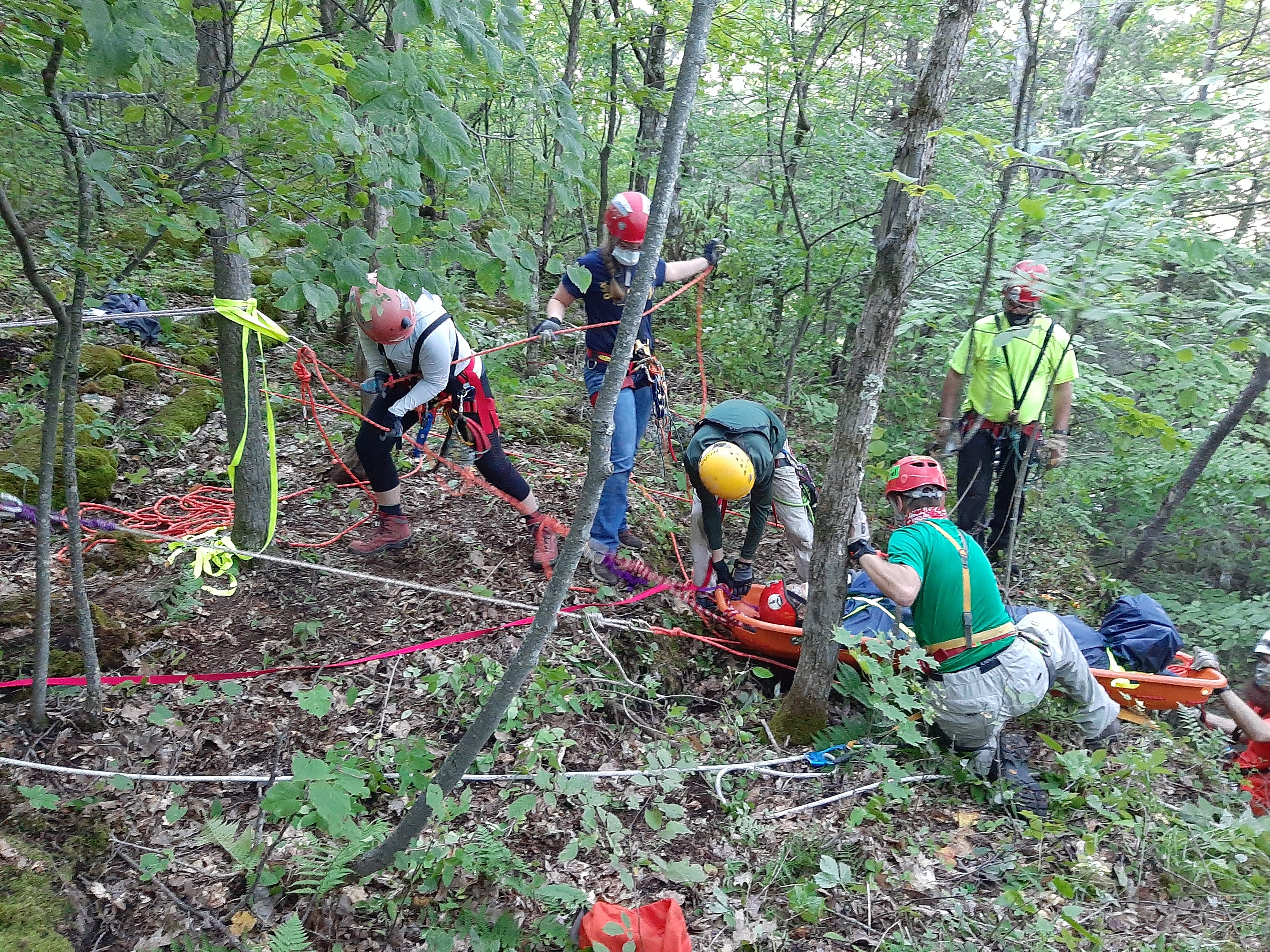
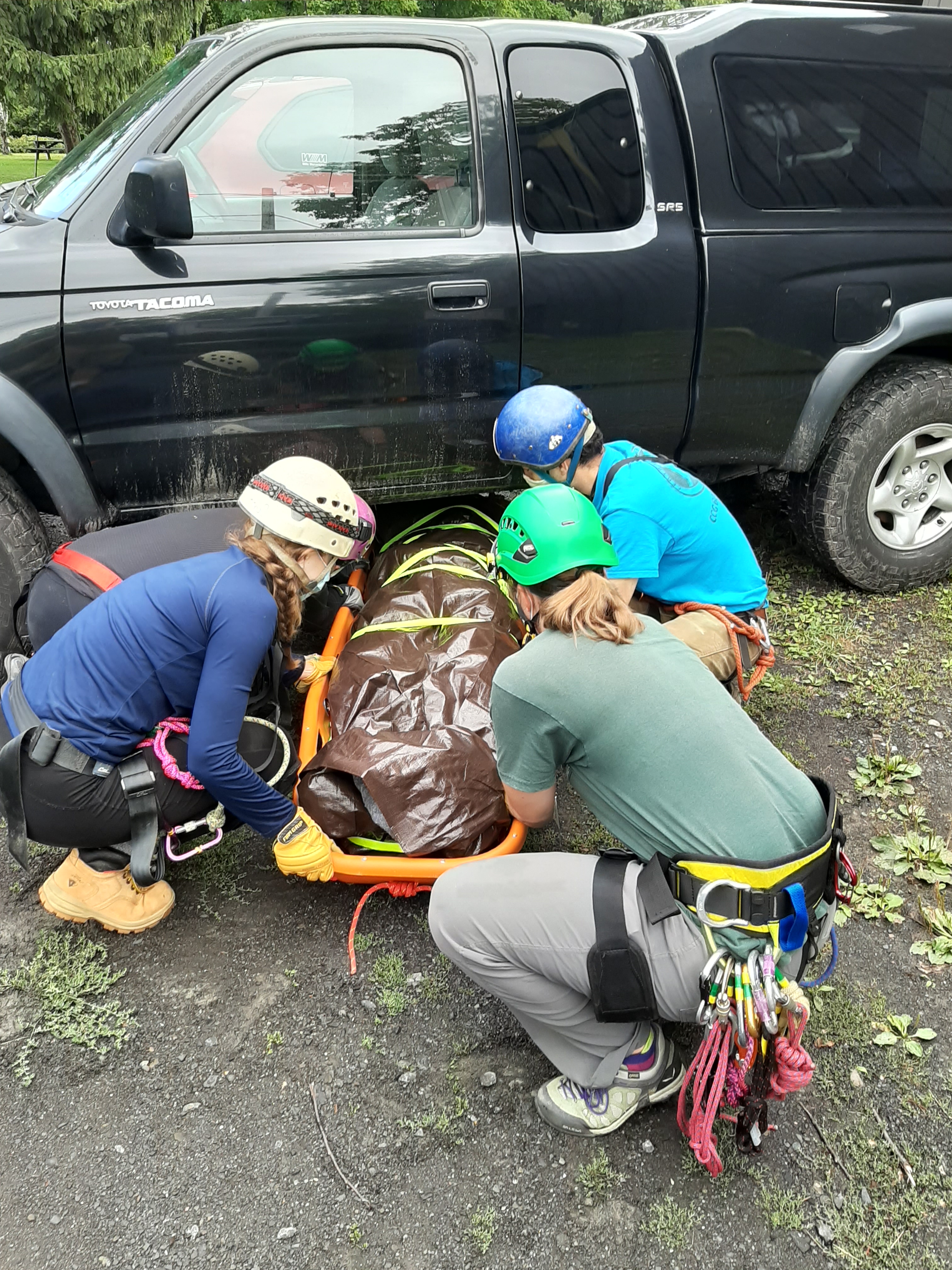
Level 1 students pull a patient up over a cliff

Safely getting a patient over the edge

Concluding

So we have two more weekends to go before they can call themselves trained as Level 1 students and hopefully they’ll keep learning and improving beyond that. For me, as long and tiring as the weekend was (I think I got about 5-6 hours of sleep each night, at most) it was rewarding because I got to see students learn skills we taught AND because I got to learn stuff too. It was a great weekend and I look forward to the next two.20200829_134511


Caving and SQL

Longtime readers know that I spend a lot of my time talking about and teaching caving, more specifically cave rescue, and SQL Server, more specifically the operations side. While in some ways they are very different, there are areas where they overlap. In fact I wrote a book taking lessons from both, and airplane crashes to talk about IT Disaster Management.

Last week is a week where both had an overlap. One of the grottoes in the NSS (think like a SQL User Group) sponsored a talk on Diversity and Inclusion in the caving community. The next day, SQL Pass had a virtual panel on the exact same subject.

Welcoming

Let me start with saying that one thing I appreciate about both communities is that they will welcome pretty much anyone. You show up and ask to be involved and someone will generally point you in the right direction.  In fact several years ago, I heard an Oracle DBA mention how different the SQL community was from his Oracle experience, and how welcoming and sharing we could be.

This is true in the caving community. I recall an incident decades ago where someone from out of town called up a caving friend he found in the NSS memberhsip manual and said, “hey, I hear you go caving every Friday, can I join you?” The answer was of course yes.  I know I can go many places in this country, look up a caver and instantly be pointed to a great restaurant, some great caves and even possibly some crash space to sleep.

So let’s be clear, BOTH communities are very welcoming.

And I hear that a lot when the topic of diversity and inclusion comes along. “Oh we welcome anyone. They just have to ask.”

But…

Well, there’s two issues there and they’re similar in both communities. The less obvious one is that often anyone is welcome, but after that, there’s barriers, some obvious, some less so. Newcomers start to hear the subtle comments, the subtle behaviors. For example, in caving, modesty is often not a big deal. After crawling out of a wet muddy hole, you may think nothing of tearing off your clothes in the parking lot and changing. Perhaps you’re standing behind a car door but that’s about it. It’s second nature, it’s not big deal. But imagine now that you’re the only woman in that group. Sure, you were welcomed into the fold and had a blast caving, how comfortable are you with this sudden lack of modesty? Or you’re a man, but come from a cultural or religious background where modesty is a high premium?

In the SQL world, no one is getting naked in the datacenters (I hope). But, it can be subtle things there too. “Hey dudes, you all want to go out for drinks?” Now many folks will argue, “dudes is gender neutral”. And I think in most cases it’s INTENDED to be. But, turn around and ask them, “are you attracted to dudes?” and suddenly you see there is still a gender attached.  There’s other behaviors to. There’s the classic case of when a manager switched email signatures with one of his reports and how the attitudes of the customers changed, simply based on whose signature was on the email.

So yes, both groups definitely can WELCOME new folks and folks outside of the majority, but do the folks they welcome remain welcomed? From talking to people who aren’t in the majority, the answer I often get is “not much.”

An Interlude

“But Greg, I know….” insert BIPOC or woman or other member of a minority.  “They’re a great DBA” or “They’re a great caver! Really active in the community.”  And you’re right. But you’re also seeing the survivorship bias. In some cases, they did find themselves in a more welcoming space that continued to be welcoming. In some cases you’re seeing the ones who forged on anyway. But think about it, half our population is made up of women. Why aren’t 1/2 our DBAs?  In fact, the number of women in IT is declining! And if you consider the number of women in high school or college who express an interest in IT and compare it to those in in their 30s, you’ll find the number drops. Women are welcome, until they’re not.

In the caving community during an on-line discussion where people of color were speaking up about the barriers they faced, one person, a white male basically said, “there’s no racism in caving, we’ll welcome anyone.”  A POC pointed out that “as a black man in the South, trust me, I do NOT feel safe walking through a field to a cave.”  The white man continued to say, “sure, but there’s no racism in caving” completely dismissing the other responder’s concerns.

There’s Still More…

The final point I want to make however is that “we welcome people” is a necessary, but not sufficient step. Yes, I will say pretty much every caver I know will welcome anyone who shows an interest. But that’s not enough. For one thing, for many communities, simply enjoying the outdoors is something that’s not a large part of their cultural.  This may mean that they’re not even aware that caving is a possibility. Or that even if it is, they may not know how to reach out and find someone to take them caving.

Even if they overcome that hurdle, while caving can be done on the cheap, there is still the matter of getting some clothing, a helmet, some lights. There’s the matter of getting TO the cave.

In the SQL world, yes anyone is welcome to a SQL Saturday, but what if they don’t have a car? Is mass transit an option? What if they are hearing impaired? (I’ve tried unsuccessfully 2 years in a row to try to provide an ASL interpreter for our local SQL Saturday. I’m going to keep trying). What if they’re a single parent? During the work week they may have school and daycare options, but that may not be possible for a SQL Saturday or even an afterhours event. I even had something pointed out to me, during my talk on how to present, that someone in the audience had not realized up until I mentioned it, that I was using a laser pointer. Why? Because they were colorblind and never saw the red dot. It was something that I, a non-colorblind person had never even considered. And now I wonder, how many other colorblind folks had the same issue, but never said anything?

In Conclusion

It’s easy and honestly tempting to say, “hey, we welcome anyone” and think that’s all there is to it. The truth is, it takes a LOT more than that. If nothing else, if you’re like me, an older, cis-het white male, take the time to sit in on various diversity panels and LISTEN. If you’re invited to ask questions or participate, do so, but in a way that acknowledges your position. Try not to project your experiences on to another. Only once have I avoided a field to get to a cave, because the farmer kept his bull there. But I should not project MY lack of fear about crossing a field onto members of the community who HAVE experienced that.

Listen for barriers and work to remove them. Believe others when they mention a barrier. They may not be barriers for you, but they are for others. When you can, try to remove them BEFORE others bring them up. Don’t assume a barrier doesn’t exist because no one mentions it. Don’t say, “is it ok if I use a red laser pointer?” because you’re now putting a colorblind person on the spot and singling them out. That will discourage them. For example find a “software” pointer (on my list of things to do) that will highlight items directly on the screen. This also works great for large rooms where there may be multiple projection screens in use.

If caving, don’t just assume, “oh folks know how to find us” reach out to community groups and ask them if they’re interested and offer to help. (note I did try this this year, but never heard back and because of the impact of Covid, am waiting until next year to try again.)

Don’t take offense. Unless someone says, “hey, Greg, you know you do…” they’re not talking about you specifically, but about an entire system. And no one is expecting you to personally fix the entire system, but simply to work to improve it where you can. It’s a team effort. That said, maybe you do get called out. I had a friend call me out on a tweet I made. She did so privately. And she did so because, she knew I’d listen. I appreciated that. She recognized I was human and I make mistakes and that given the chance, I’ll listen and learn. How can one take offense at that? I saw it has a sign of caring.

Finally realize, none of us are perfect, but we can always strive to do better.

So, today give some thought about how you can not only claim your community, whatever it may be, is welcoming, but what efforts you can make to ensure it is.


On a separate note, check out my latest writing for Red-Gate, part II on Parameters in PowerShell.

SQL Saturday Albany 2020

So, another SQL Saturday Albany is in the books. First, I want to thank Ed Pollack and his crew for doing a great job with a changing and challenging landscape.  While I handle the day to day and monthly operations of the Capital Area SQL Server User Group, Ed handles the planning and operations of the SQL Saturday event. While the event itself is only 1 day of the year, I suspect he has the harder job!

This year of course planning was complicated by the fact that the event had to become a virtual event. However, it’s a bit ironic we went virtual because in many ways, the Capital District of NY is probably one of the safer places in the country to have an in-person event. That said, virtual was still by far the right decision.

Lessons Learned

Since more and more SQL Saturdays will be virtual for the foreseeable future, I wanted to take the opportunity to pass on some lessons I learned and some thoughts I have about making them even more successful. Just like the #SQLFamily in general passing on knowledge about SQL Server, I wanted to pass on knowledge learned here.

For Presenters

The topic I presented on was So you want to Present: Tips and Tricks of the Trade. I think it’s important to nurture the next generation of speakers. Over the years I was given a great deal of encouragement and advice from the speakers who came before me and I feel it’s important to pass that on. Normally I give this presentation in person. One of the pieces of advice I really stress in it is to practice beforehand. I take that to heart. I knew going into this SQL Saturday that presenting this remotely would create new challenges. For example, on one slide I talk about moving around on the stage. That doesn’t really apply to virtual presentations. On the other hand, when presenting them in person, I generally don’t have to worry about a “green-screen”. (Turns out for this one I didn’t either, more on that in a moment.)

So I decided to make sure I did a remote run through of this presentation with a friend of mine. I can’t tell you how valuable that was. I found that slides I thought were fine when I practiced by myself didn’t work well when presented remotely. I found that the lack of feedback inhibited me at points (I actually do mention this in the original slide deck). With her feedback, I altered about a 1/2 dozen slides and ended up adding 3-4 more. I think this made for a much better and more cohesive presentation.

Tip #1: Practice your virtual presentation at least once with a remote audience

They don’t have to know the topic or honestly, even have an interest in it. In fact I’d argue it might help if they don’t, this means they can focus more on the delivery and any technical issues than the content itself. Even if you’ve given the talk 100 times in front of a live audience, doing it remotely is different enough that you need feedback.

Tip #2: Know your presentation tool

This one actually came back to bite me and I’m going to have another tip on this later. I did my practice run via Zoom, because that’s what I normally use. I’m used to the built-in Chroma Key (aka green-screen) feature and know how to turn it on and off and to play with it. It turns out that GotoWebinar handles it differently and I didn’t even think about it until I got to that part of my presentation and realized I had never turned it on, and had no idea how to! This meant that this part of my talk didn’t go as well as planned.

Tip #3: Have a friend watch the actual presentation

I actually lucked out here, both my kids got up early (well for them, considering it was a weekend) and watched me present. I’m actually glad I didn’t realize this until the very end or else I might have been more self-conscious. That said, even though I had followed Tip #1 above, they were able to give me more feedback. For example, (and this relates to Tip #2), the demo I did using Prezi was choppy and not great. In addition, my Magnify Screen example that apparently worked in Zoom, did not work in GotoWebinar! This feedback was useful. But even more so, if someone you know and trust is watching in real-time, they can give real-time feedback such as issues with bandwidth, volume levels, etc.

Tip #4: Revise your presentation

Unless your presentation was developed exclusively to be done remotely, I can guarantee that it probably need some changes to make it work better remotely. For example, since most folks will be watching from their computer or phone, you actually may NOT need to magnify the screen such as you would in a live presentation with folks sitting in the back of the room. During another speaker’s presentation, I realized they could have dialed back the magnification they had enabled in SSMS and it would have still been very readable and also presented more information.

You also can’t effectively use a laser pointer to highlight items on the slide-deck.

You might need to add a few slides to better explain a point, or even remove some since they’re no longer relevant. But in general, you can’t just shift and lift a live presentation to become a remote one and have it be as good.

Tip #5: Know your physical setup

This is actually a problem I see at times with in-person presentations, but it’s even more true with virtual ones and it ties to Tip #2 above. If you have multiple screens, understand which one will be shown by the presentation tool. Most, if not all, let you select which screen or even which window is being shared. This can be very important. If you choose to share a particular program window (say PowerPoint) and then try to switch to another window (say SSMS) your audience may not see the new window. Or, and this is very common, if you run PowerPoint in presenter mode where you have the presented slides on one screen, and your thumbnails and notes on another, make sure you know which screen is being shared. I did get this right with GotoWebinar (in part because I knew to look for it) but it wasn’t obvious at first how to do this.

In addition, decide where to put your webcam! If you’re sharing your face (and I’m a fan of it, I think it makes it easier for others to connect to you as a presenter) understand which screen you’ll be looking at the most, otherwise your audience may get an awkward looking view of you always looking off to another screen. And, if you can, try to make “eye contact” through the camera from time to time. In addition, be aware, and this is an issue I’m still trying to address, that you may have glare coming off of your glasses. For example, I need to wear reading glasses at my computer, and even after adjusting the lighting in the room, it became apparent, that the brightness of my screens alone was causing a glare problem. I’ll be working on this!

Also be aware of what may be in the background of your camera. You don’t want to have any embarrassing items showing up on your webcam!

For Organizers

Tip #6: Provide access to the presentation tool a week beforehand

Now, this is partly on me. I didn’t think to ask Ed if I could log into one of the GotoWebinar channels beforehand, I should have. But I’ll go a step further. A lesson I think we learned is that as an organizer, make sure presenters can log in before the big day and that they can practice with the tool. This allows them to learn all the controls before they go live. For example, I didn’t realize until 10 minutes was left in my presentation how to see who the attendees were. At first I could only see folks who had been designated as a panelist or moderator, so I was annoyed I couldn’t see who was simply attending. Finally I realized what I thought was simply a label was in fact a tab I could click on. Had I played with the actual tool earlier in the week I’d have known this far sooner.  So organizers, if you can, arrange time for presenters to log in days before the event.

Tip #7: Have plenty of “Operators”

Every tool may call them by different names but ensure that you have enough folks in each “room” or “channel” who can do things like mute/unmute people, who can ensure the presenter can be heard, etc. When I started my presentation, there was some hitch and there was no one around initially to unmute me. While I considered doing my presentation via interpretive dance or via mime, I decided to not to. Ed was able to jump in and solve the problem. I ended up losing about 10 minutes of time due to this glitch.

Tip #8: Train your “Operators”

This goes back to the two previous tips, make sure your operators have training before the big day. Setup an hour a week before and have them all log in and practice how to unmute or mute presenters, how to pass control to the next operator, etc. Also, you may want to give them a script to read at the start and end of each session. “Good morning. Thank you for signing in. The presenter for this session will be John Doe and he will be talking about parameter sniffing in SQL Server. If you have a question, please enter it in the Q&A window and I will make sure the presenter is aware of it. This session is/isn’t being recorded.” At the end a closing item like, “Thank you for attending. Please remember to join us in Room #1 at 4:45 for the raffle and also when this session ends, there will be a quick feedback survey. Please take the time to fill it out.”

Tip #9: If you can, have a feedback mechanism

While people often don’t fill out the written feedback forms at a SQL Saturday, when they do, they can often be valuable. Try to recreate this for virtual ones.

Tip #10Have a speaker’s channel

I hadn’t given this much thought until I was talking to a fellow speaker, Rie Irish later, and remarked how I missed the interaction with my fellow speakers. She was the one who suggested a speaker’s “channel” or “room” would be a good idea and I have to agree. A private room where speakers can log in, chat with each other, reach out to operators or organizers strikes me as a great idea. I’d highly suggest it.

Tip #11: Have a general open channel

Call this the “hallway” channel if you want, but try to recreate the hallway experience where folks can simply chat with each other. SQL Saturday is very much a social event, so try to leverage that! Let everyone chat together just like they would at an in-person SQL Saturday event.

For Attendees

Tip #12: Use social media

As a speaker or organizer, I love to see folks talking about my talk or event on Twitter and Facebook. Please, share the enthusiasm. Let others know what you’re doing and share your thoughts! This is actually a tip for everyone, but there’s far more attendees than organizers/speakers, so you can do the most!

Tip #13: Ask questions, provide feedback

Every platform used for remote presentations offers some sort of Q&A or feedback. Please, use this. As a virtual speaker, it’s impossible to know if my points are coming across. I want/welcome questions and feedback, both during and after. As great as my talks are, or at least I think they are, it’s impossible to tell without feedback if they’re making an impact. That said, let me apologize right now, if during my talk you tried to ask a question or give feedback, because of my lack of familiarity with the tool and not having the planned operator in the room, I may have missed it.

Tip #14: Attend!

Yes, this sounds obvious, but hey, without you, we’re just talking into a microphone! Just because we can’t be together in person doesn’t mean we should stop learning! Take advantage of this time to attend as many virtual events as you can! With so many being virtual, you can pick ones out of your timezone for example to better fit your schedule, or in different parts of the world! Being physically close is no longer a requirement!

In Closing

Again, I want to reiterate that Ed and his team did a bang-up job with our SQL Saturday and I had a blast and everyone I spoke to had a great time. But of course, doing events virtually is still a new thing and we’re learning. So this is an opportunity to take the lessons from a great event and make yours even better!

I had a really positive experience presenting virtually and look forward to my PASS Summit presentation and an encouraged to put in for more virtual SQL Saturdays after this.

In addition, I’d love to hear what tips you might add.