Reasons I Attend WIT Events

Last Friday, I took time out of my day to attend the Data Platform WIT Day. Hosted on Redgate’s Zoom, it was a series of webinars that started with Rie Merritt’s excellent Keynote Lifting as we Climb and concluded with Stepping Stones from Diversity Learning to Equitable Actions with Cindy Gross. The full list of sessions is available at YouTube here.

I highly recommend you take some time out and check out the sessions that may appeal to you. The keynote is 30 minutes and the follow-on sessions are roughly an hour each. Because of other events on my schedule I wasn’t able to attend all of them, for example I could only jump into Cindy’s about half-way through, but very much enjoyed what I watched and learned quite a bit.

Afterwards, one of the organizers, Mala Mahadevan tweeted the following:

https://twitter.com/sqlmal/status/1367951596227854340

I was caught a bit off-guard by the call-out, but not in an unpleasant way. I’m proud to support WIT. And it prompted me to write this post on my usual Tuesday, just a day after International Women’s Day.

I attended for two reasons: one was for learning and the second was honestly to be supportive.

The first reason should be obvious. There’s some good information in these webinars. Tracy Boggiano gave a great presentation on dbatools and dbachecks, tools that I definitely need to learn more about. The panel on mentoring with Leslie Andrews, Shabnam Watson, Deborah Melkin, Gilda Alvarez, and Deepthi Goguri was a great learning experience for me. I gained further insight into how mentoring can work, especially for those who have a different experience than mine. And while the panel focused more on the experience and value of mentoring for women, I gained several great takeaways. So it wasn’t just a “women for women” type event.

But quite honestly, I attended in part for the same reason I’ve often started using my pronouns in various places (him/his for those who aren’t aware): to normalize the practice. I think it’s important for those who don’t identify as women, and especially for those who identify as men to attend such events. While the focus of a WIT event is for women, it does not mean men can’t learn from it. It doesn’t mean we’re not welcome. I had heard much of Rie’s talk before, since she adopted it from other talks she’s given. It’s primary focus is of course on how women can help women grow in their professional careers. But there are tips that men can learn, such as not interrupting the women they work with, amplifying their voices, and more. I tell the story that the first time I heard Rie speak, I was one of two men in the room, and the other was a friend she had apparently asked to attend in order to give her feedback. I was a bit saddened there were not more men there, as we need to learn a lot of what she has spoken about. I suspect some men felt “oh I don’t need to go” or “there’s nothing there for me.” But they’re wrong and I want to continue to normalize attending such event for those who present as men. And I attended of course because I want my women colleagues to know they have support, that I value their contributions and experiences.

Now that said, I will add that events such as last Friday’s are “Women in Technology” events. The focus is in the name. While welcome, men should avoid any attempts, conscious or subconscious to center them on their own experiences. What do I mean? For one, during the Q&A parts, if you feel tempted to say “I have more of a comment than a question…” just stop. Nope. It’s a Q&A period, not “I want to hijack the discussion and talk about myself period.” This is not to say questions aren’t welcome. But make sure they’re actually relevant to the topic at hand, e.g. “Tracy, I think I missed something, am I correct in understanding that the latest version of dbachecks has a problem with the latest version of Pester?”

So my advice, do your best to be an ally by your actions, not your claims.

And that said, for those who are inevitably going to ask: When it International Men’s Day?
Whatcha Reading?

I thought I’d start off March with something a bit lighthearted and as sort of a follow-up to last week’s post about what I’ve been eating in the last year.

For as long as I can recall, I’ve loved reading. I could not wait until my kids could learn to read. Without reading, we are in many ways limited to what we can see with our own eyes right in front of us. But by reading, we open up whole new worlds.

I’ve stood on the peak of Amon Hen with a Halfling as he stood there, wearing a magic ring, debating what he should do as he looked across the world and could feel himself being spied upon.

I’ve flown in a spacecraft controlled by an intelligent computer that was given opposing directives that it decided it could only resolve by killing its crew as it flew through space on its way to a flat rectangle whose dimensions were known to us to be in a ratio of 1:4:9 and in higher dimensions could be said to extend to to 16, 25 and possibly higher.

I’ve travelled the ante-bellum Mississippi with a young man named Huck and his best friend Jim. I’ve wondered why the hounds of Baskerville didn’t bark. I’ve flown over Italy, dropping bombs on people wondering why I was doing that as they had never done anything to me. And people thought I was the crazy one.

I escaped my boarding school and wandered the streets of New York City for day. (I should note my dad insisted I read this one and told me I’d really relate. I didn’t. I found Holden to be boring, self-centered and honestly, just plain annoying). On the other hand, I loved riding in an automobile escaping New York City to Long Island while past a valley of ashes during the roaring 20s. Those same ashes appear later in the biography of the man who would literally reshape the outline of Manhattan and the traffic patterns of that great city and other parts of New York for generations to come.

I’ve read of a dystopian future that at times seems all to close where certain women are forced to wear red cloaks and to bear children for other couples. But I’ve also sailed across the seas of a foreign world where there are no continents, just archipelagos of islands, on one of which one a young woman, raised to be a priestess/goddess to her people learns from the gentleness of a young man she’s forced to impression that there’s so much more to learn of the world and gains her freedom.

I’ve sailed into deepest Africa to find a man who has gone crazed with power. And later voyaged to the bottom of the planet on a sailing ship, only to find myself stuck with my fellow crewmates in ice for over a year. Our captain undertook a daring and amazing voyage to a whaling station, only to have to cross over the mountains between where they landed and the village in order to find our rescuers. I’ve also sailed to the Moon and back, numerous times, the first, hitchhiking along on Christmas Eve as the story of creation was read to the nations of Earth. I joined him again later only to discover once again we weren’t going to land, in fact we weren’t even going to orbit. But that’s ok, I also travelled to the Moon and back again not just once, but multiple times, including with the first man to walk on the Moon and the last.

I’ve also hiked to the top of Mount Everest and surveyed the detritus of bodies of those who attempted the trip and failed and felt relieved to know that at least one who had been left for dead later found the will-power to pick himself up and crawl to the nearest camp. In a similar vein, I’ve read both sides of the story, of two climbers in the Andes, one who had to cut the rope of his partner, letting him plummet to his death, the other being the one whose rope was cut, falling not to his death but to a miracle. But I was also heartbroken to read of the young man who went into the wilderness of Alaska to live, and ultimately die in an abandoned bus.

And then yet another morning I woke up to find myself in the body of an insect, wondering what it all meant. And another day I came home from school to find a tollbooth in my bedroom through which I could ride a toy car and be joined by a humbug and later jump to conclusions.

Ok, enough reflections on that, let me talk a bit more about what I’ve read or will read in the coming months. I’m a luddite in some ways. I still prefer the feel of dead paper in my hands. At the top of this article is a photo of some of the magazines I tend to read on an a monthly basis (I just realized at least one is missing).

Discover and Scientific American: I read monthly, cover to cover and learn all sorts of new things. I highly recommend everyone read at least one of these. Yes, some might argue they “dumb down” science, but in reality I think they make it more accessible.

NSS News: This is an interesting one. The articles can range from extremely technical (the chemistry and hydrology of a cave for example) to very lighthearted or celebratory. It’s one of the few printed items I read where on a nearly monthly basis I can expect to read the name of someone I know personally, or see their credits for photos. It also collects excerpts from grotto newsletters, giving me a more intimate feeling of what other cavers are doing.

Trains: Ok, this is a bit of a niche market, but I’ve always been fascinated by trains and railroading and in fact bought stock in BNSF long before Warren Buffet did. He just had a bit more money than I did when it came to buying the whole thing.

Outside: I’ll admit I actually read this the least. I get it for free, so it’s nice to browse when I have time. But honestly, I’d rather BE outside than read about it!

Air & Space: Again, following my theme of science and space, I love reading this one.

The Times Union: Ayup, I still read the daily newspaper. I find an online version doesn’t cut it. When I was working in the Washington DC area I also subscribed to the Washington Post (and then on the weekends would come home and catch up on the Times Union)

But what else? You may notice so far I haven’t mentioned anything about SQL Server. But, just this past month I finished reviewing a book a publisher has asked for my feedback on possibly editing and updating. So there’s that. But I find most of my SQL reading is done via blog posts. These include but are not limited to:

Monica Rathbun: some great articles, generally with a focus on performance. Well worth the read!

Deborah Melkin: I’ve known Deborah since she first came to SQL Saturday Albany to speak and have always enjoyed her style and ability to make complicated things simple enough to understand.

Steve Jones: I think he probably blogs the most of anyone I follow. I’m not sure how he does it, but it’s consistently great.

Ray Kim: a fellow member of the Capital Area SQL Server Group, he, like me blogs about a lot more than just SQL Server. He will often focus on baseball, like his most recent blog entry.

Derek Lyons: I’ll admit, anime has never really been my thing, but it’s always nice to see what a friend is writing about. But if anime IS your thing, check out his blog.

And of course I’d be remiss if I didn’t admit that I’ll google stuff a dozen times a week if I need to, so there are plenty of other blogs and pages I’ll hit on a regular basis.

And being the luddite I am, I still read Usenet and actually moderate the sci.space.tech and sci.space.science discussion gorups.

And I really do read SQL books from time to time, they’re just not overly gripping reading!

Finally, living outside of Illium, err Troy, I once met a young old man who went by the name of Billy who told me of his adventures in WWII and travelling to another planet. All the above is just a small part of what I’ve read and a small part of what I will read. And so it goes.

What’s for Dinner?

“Food!” is my usual answer. Yes it’s my dad joke answer. I can’t help it.

The truth is, I generally don’t have a well planned menu in advance and sometimes what I plan on making for dinner will change after I step in the supermarket and something catches my eye. Sometimes I won’t even have an idea until I go into the supermarket. That said, I still have sort of a routine, one my family is familiar with and perhaps at times tired of. (That said, they still eat what I make, so I guess they’re not that tired of it).

  • Monday – Usually a chicken dish. Last night was Pad Thai (but I’ll let you in on a secret, the noodles were woefully underdone. I was afraid they’d turn to mush and took them out too early!)
  • Tuesday – Usually something centered around ground beef/turkey, tacos, sloppy joes or shaved steak for Philly Cheese steaks. I’m not sure about tonight’s dinner, but since I did tacos last week, I can guarantee it won’t be Taco Tuesday tonight. I don’t like repeats. 🙂
  • Wednesday – Up in the air. Sometimes a grilled sausage, onion and pepper on a bun.
  • Thursday – Often store bought ravioli or tortellini. They’re simple and quick.
  • Friday – I get more creative, often some crab cakes, maybe scallops, or something good.
  • Saturday – At least once a month, pizza with homemade crust (and occasionally homemade mozzarella).
  • Sunday – Take out. Previously 90%+ of the time it was Lee Lin, a Chinese food place I’ve been ordering from for decades (literally since college) but now we vary it up with other take out places.

So yeah If you happen to show up at my house (post-pandemic please) you’ve got an idea of what you’ll end up with depending on what night you show up. Maybe. I might change my mind.

I really enjoy cooking. I love the idea of creation and the idea of nourishing body and soul. I like the fact that food can bring joy to people.

During the time of Covid, there have been times when cooking has been a real drudgery, but other times I’ve really enjoyed it or had the chance to try new things. For example, like many Americans I’ve dabbled with making Sourdough.

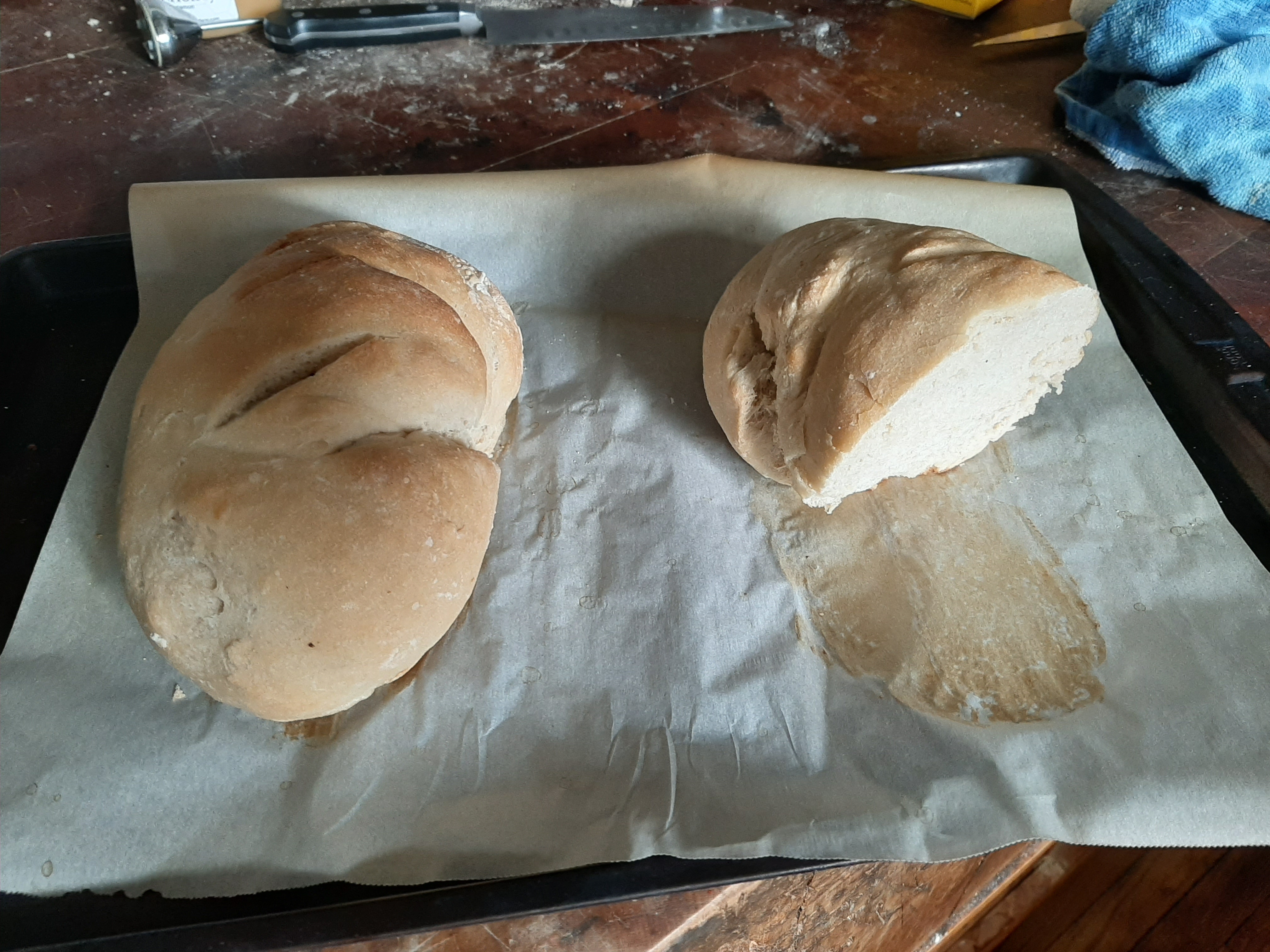
Image is of  full loaf (on the left) and a half loaf of homemade sourdough bread.
Fresh Sourdough, an early attempt.
A roast beef sandwich with lettuce and tomato and mayo on a plate. In the background is a keyboard.
Roast Beef Sandwich with homemade sourdough bread!

Of course I mentioned pizzas?

An image of two pizzas from above, resting on a butcher block.
The one on the left is a pepperoni pizza. The one on the right is a white pizza with sundried tomatoes. 
Both have fresh basil from my garden on them.
Two sourdough pizzas with home grown herbs.
Image of two pizzas looking from above. On top of a butcher block.
Top one has fried onions, Granny Smith apple, bacon, sundried tomatoes.

Bottom one is white pizza with home made pesto.
Two more: the top is bacon, sundried tomato, Granny Smith Apple, fried onions! The bottom a white pizza with homemade pesto and some sundried tomatoes
“Breakfast Pizza” with cheddar cheese, bacon, black pepper and a pair of eggs cracked on top near the end.

For Thanksgiving I tried something new:

An experiment for Thanksgiving dessert - apple sharlotka. It was a success!
An experiment for Thanksgiving dessert – apple sharlotka. It was a success!

And of course one has to have sweets!

Gingersnap cookies
LOTS of sugar and carbs!
Bags of Christmas Cheer
A smattering of gingerbread men!

But of course, the question is “what’s for dinner?

My French-Canadian grandmother’s recipe for baked kibbeh taught to her by her Lebanese mother-in-law. BTW, this is 1/2 the amount she’d normally make for family gatherings! This is over 3 lbs of meat plus bulgur wheat and onions! It’s a LOT of food and oh so delicious.
I actually bought my air fryer BEFORE the pandemic, but love it and use it a lot and find it makes great wings. (And the cinnamon cap has nothing to do with the wings.)
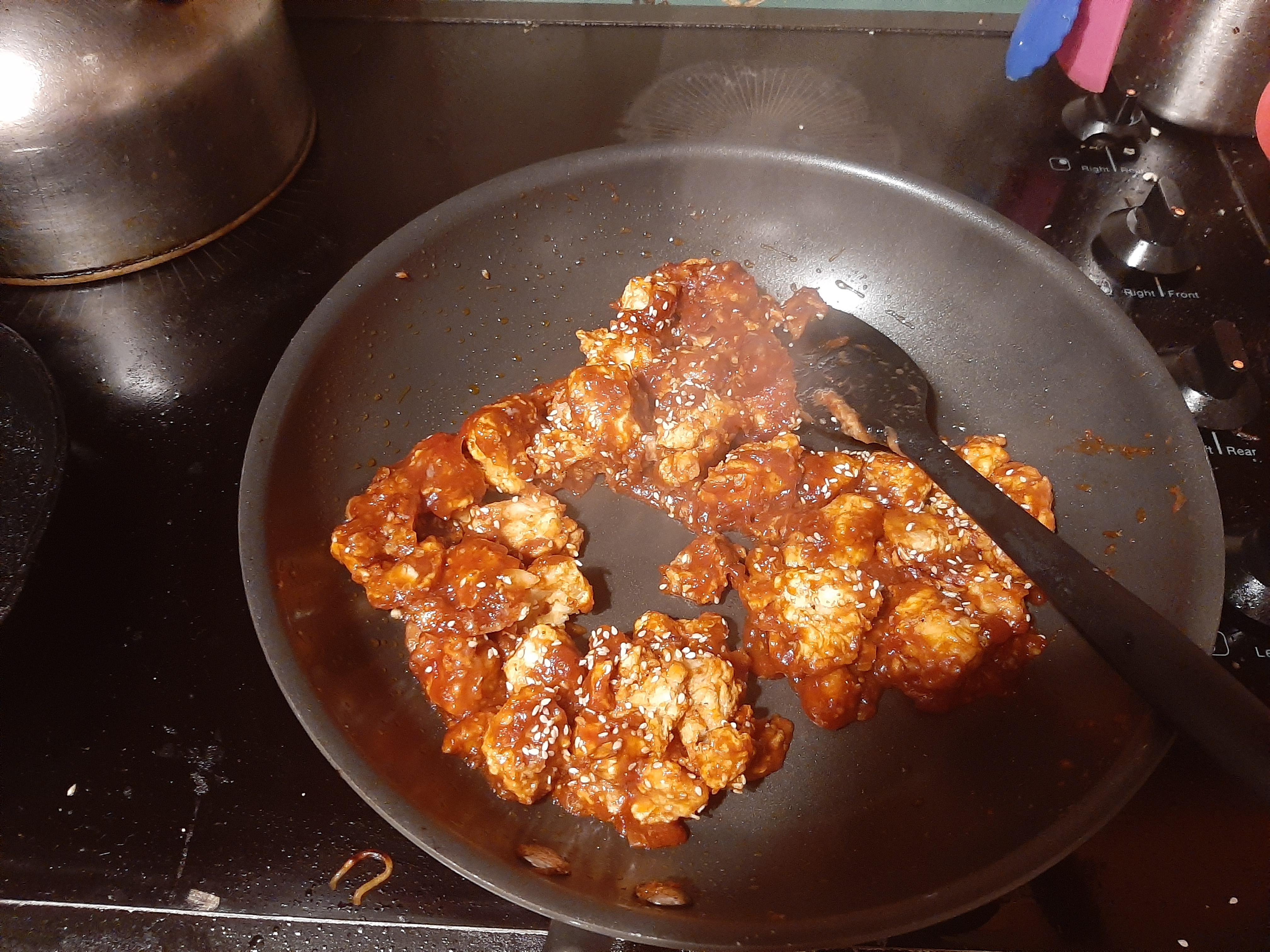
Air fried General Tso’s Chicken, finished in the pan. Thanks to #SQLFamily fellow DBA Rie Shewbart Merritt for the recipe!
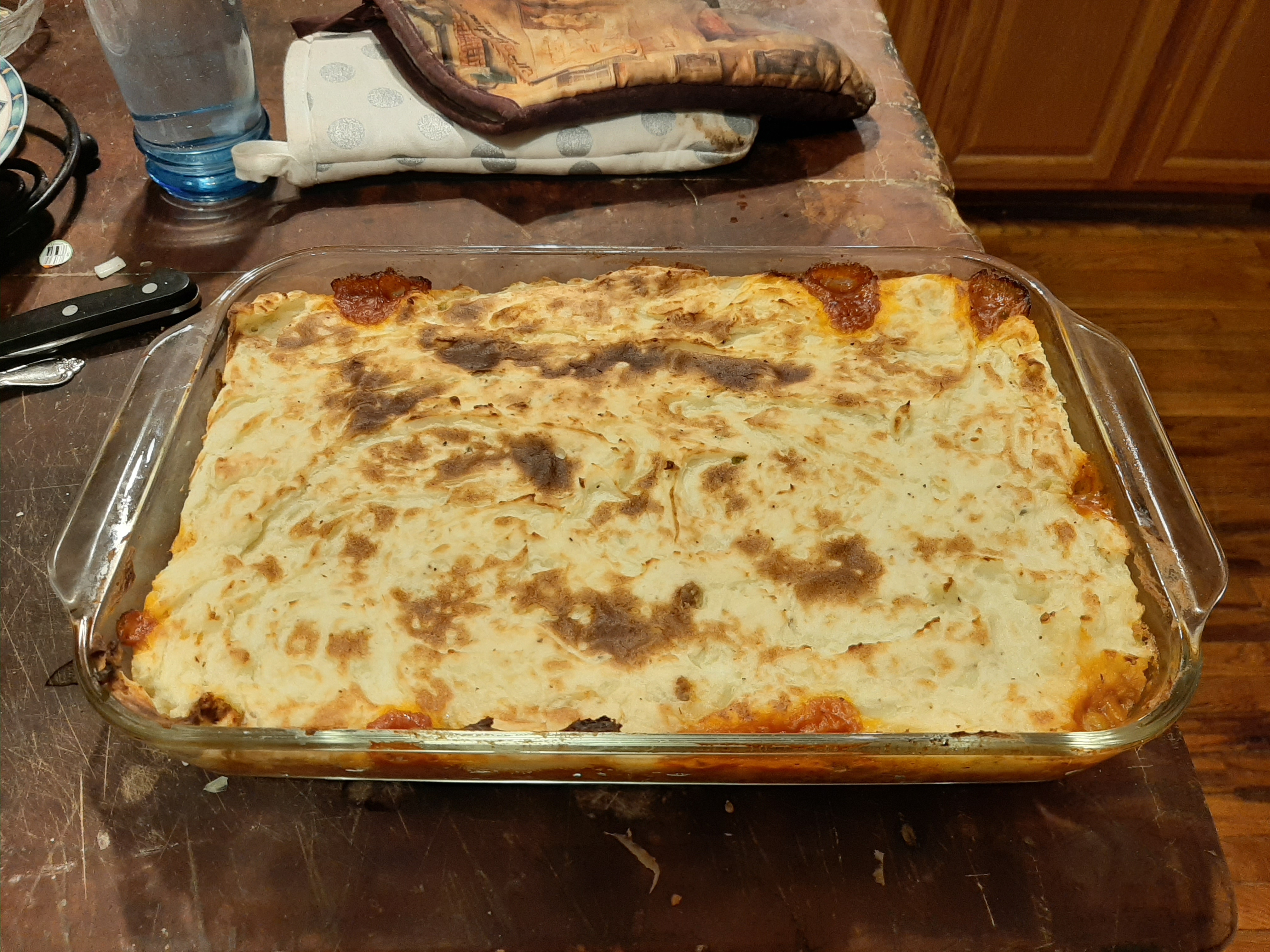
Technically “Cottage Pie” because it’s made with beef instead of lamb, but still delicious, and one of Randi’s favorites!
A Friday dinner with steak and potato (and yes, I’m a heathen who likes a bit of ketchup with my steak, but that sauce is delicious too!)
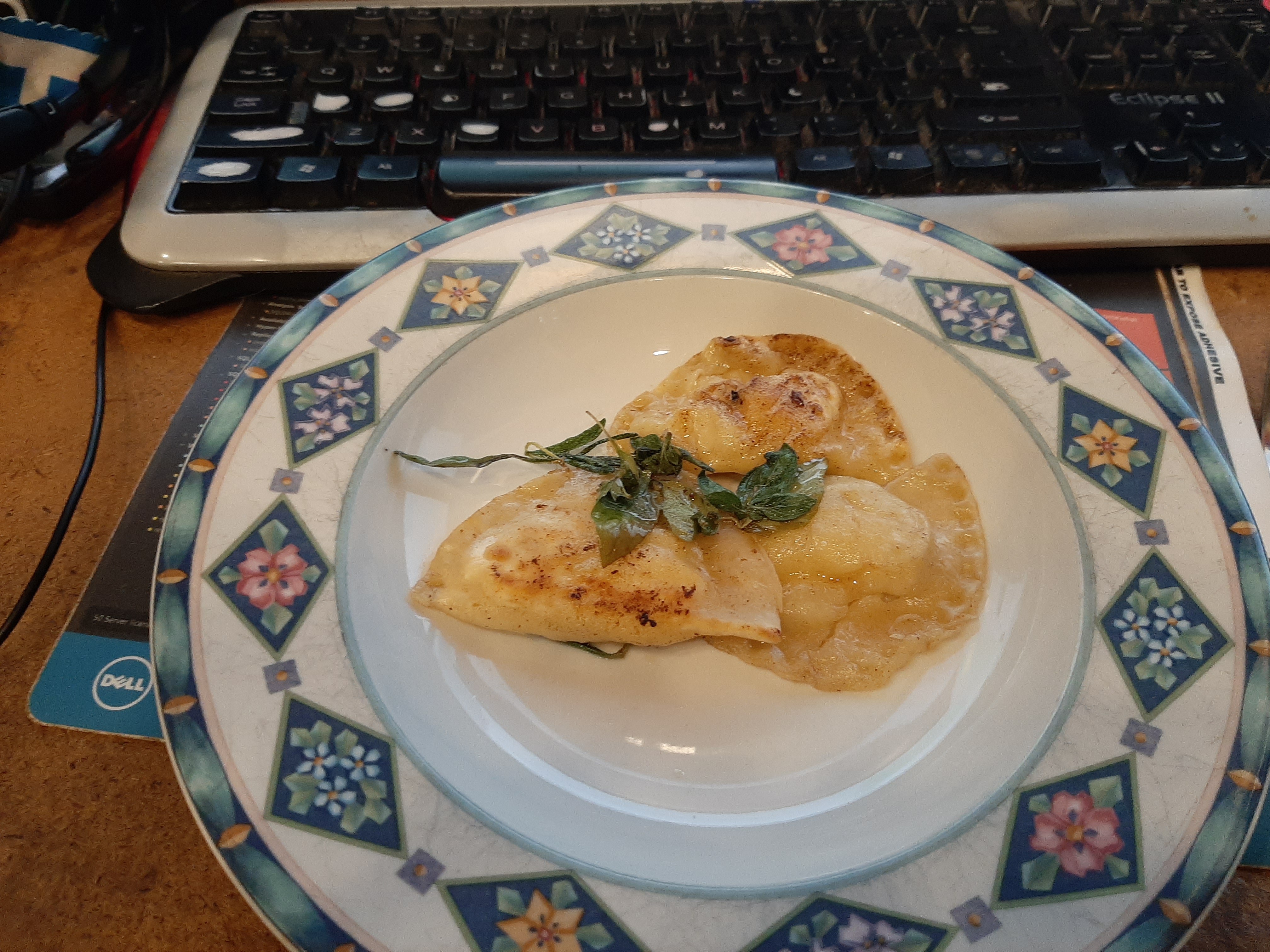
Perogies that close family friend Christine Dzakowic Walsh had made, but fresh herbs from my garden.
Another Friday dinner. That’s my burger on the right, with the works, grilled onions, bacon, bleu cheese, lettuce, tomato, garlic-parm fries!
Can I interesting you in mini-beef wraps with mashed potatoes with a wine-sauce reduction? I think I got this one from close friend Sarah Lawrence.
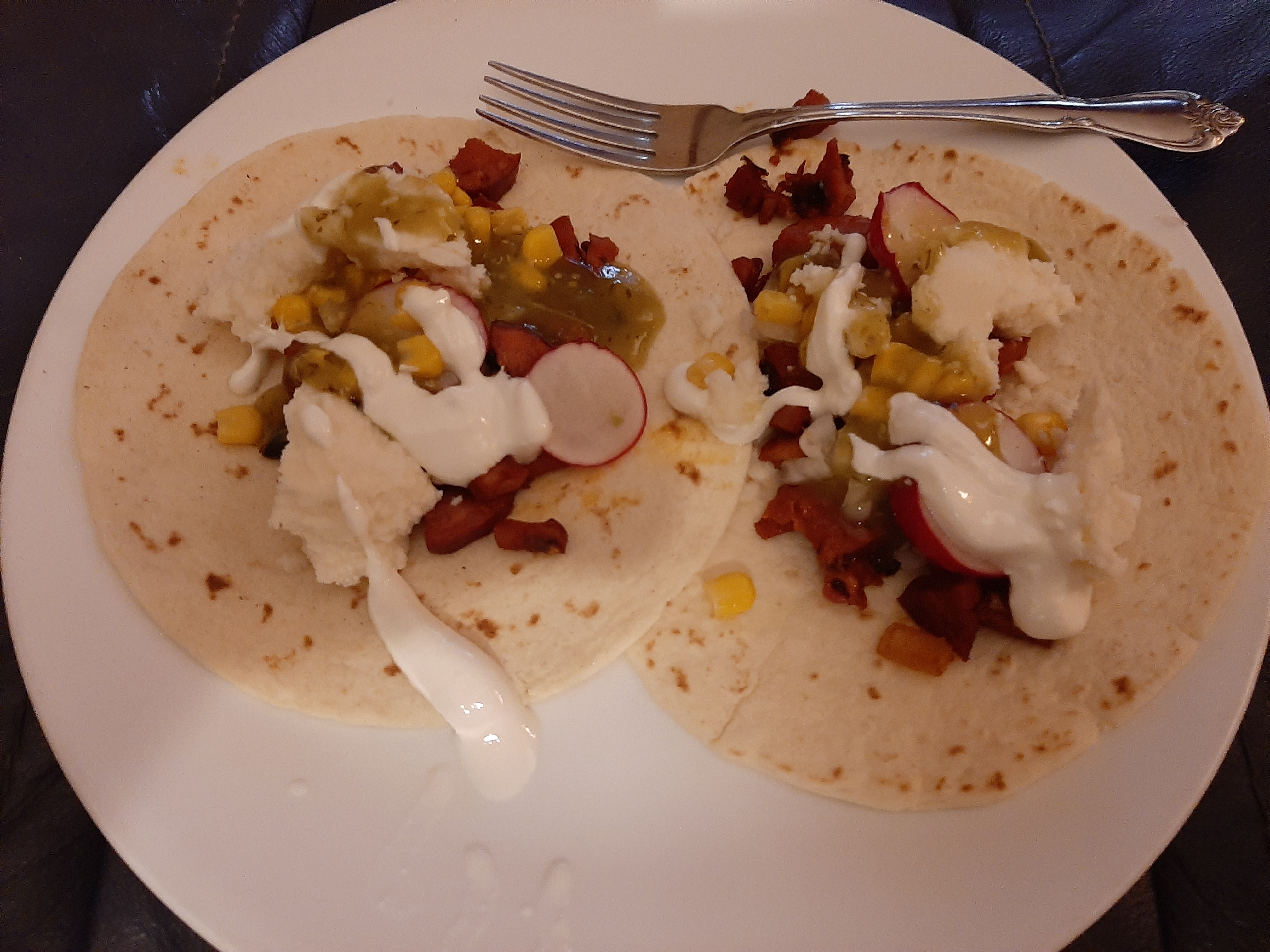
Chorizo street tacos anyone?
Homemade Falafel and homemade hummus with a peanut sauce and veggies and homemade pita. I need to make this again soon I think.
Of course latkes are a must in this house come Hanukkah! (toss in some curry powder, trust me on that one!)
Homemade pasta with homemade pesto and Presto… delicious dinner!
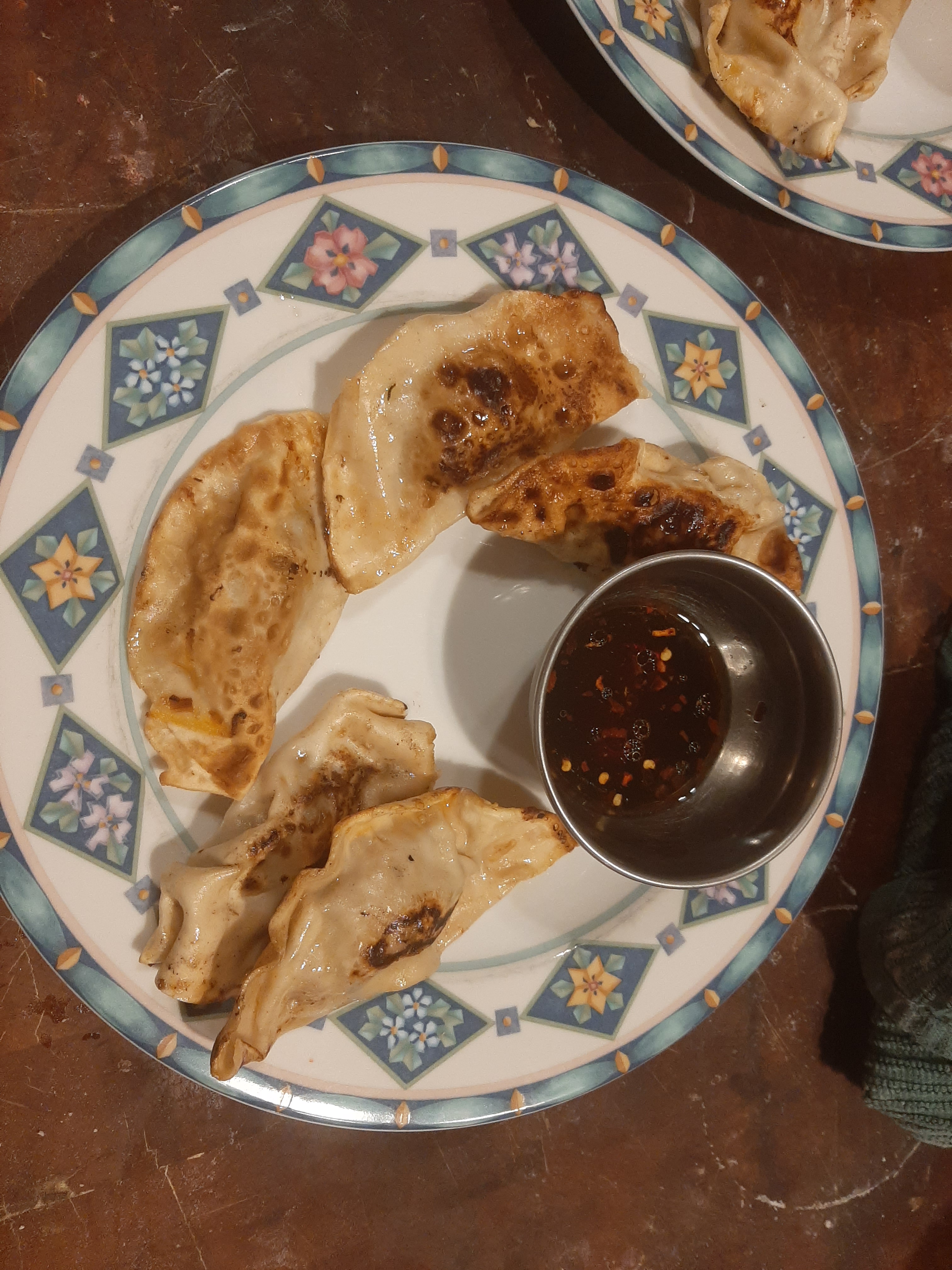
My most recent experiment, homemade dumplings! Delicious but need some work!
Some homemade chili with yes.. sourdough bread!
Coquille St Jacques – delicious! My mom introduced me to this dish when I was about 10.

And besides dinner, there’s breakfast

French toast with lots of cinnamon!
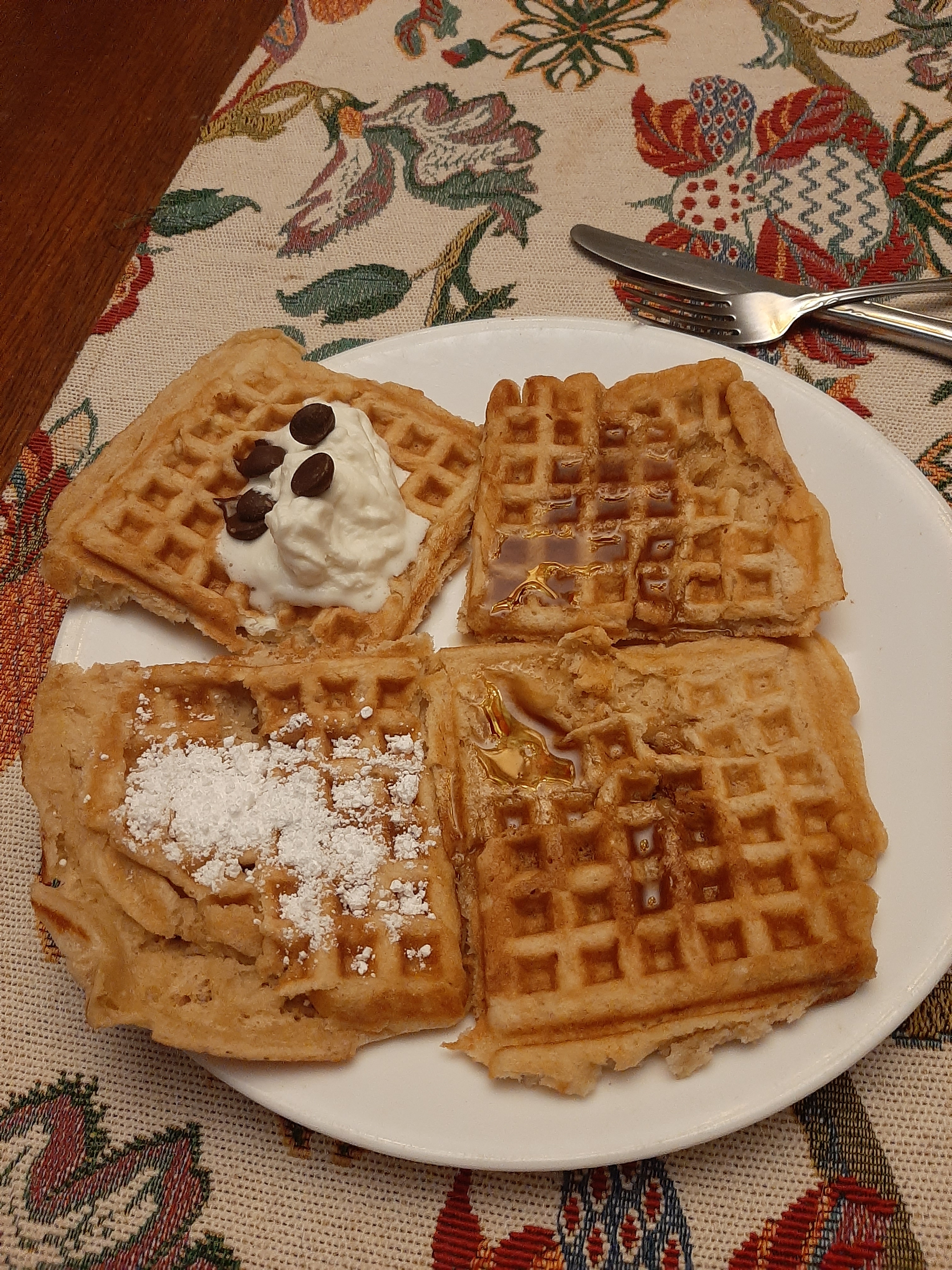
Sourdough waffles with a variety of toppings (including homemade whipped cream!)
Sourdough pancakes!
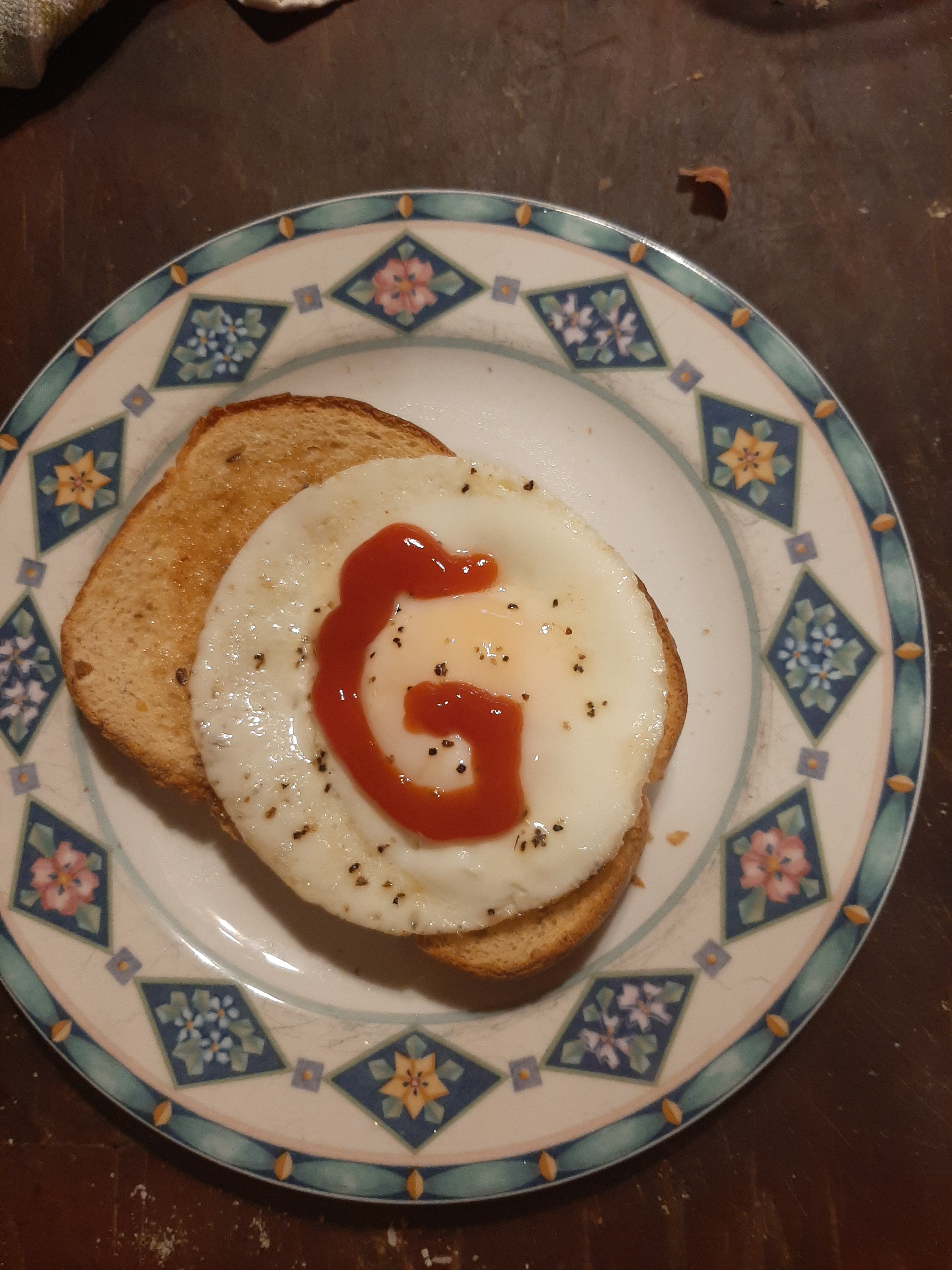
Yes, I put ketchup on my eggs. Deal with it. And yes, that’s my initial. It’s my egg. I can do that!
My latest attempt at homemade bagels. I think I nailed it this time. More in the future!

Snacking is important too!

Homemade Pita (roll it very thing and place in a very hot oven!) with homemade Hummus!

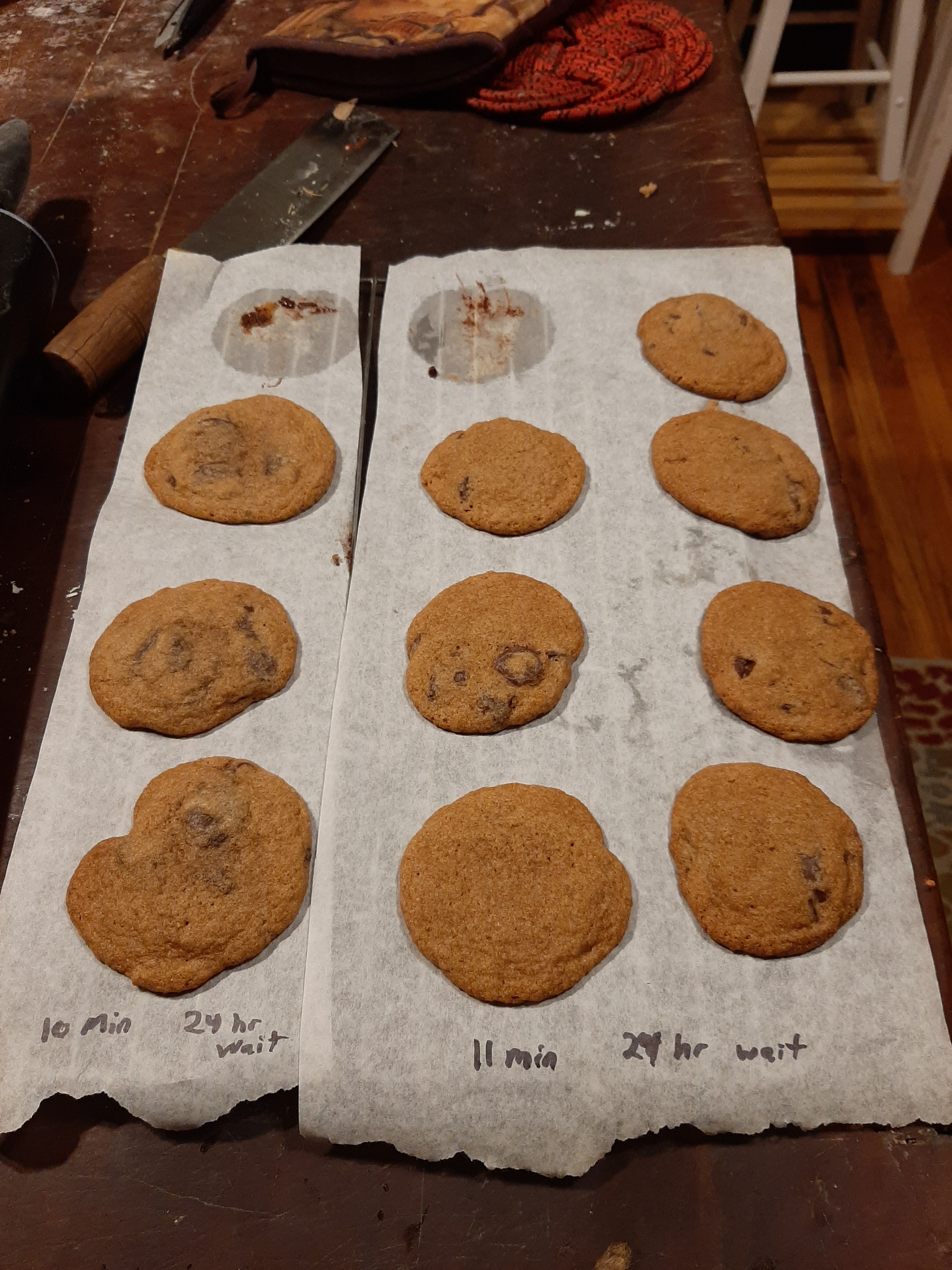
Now, that’s not to say it’s all fun and games. Sometimes one does have to collect data on how to make things better. Recently I had been reading up on chocolate chip cookies (research of course) and learned that the original recipe called for letting the dough sit for 36 hours before baking. Now, I’m never one to take a detail like that at face value, so I had to of course experiment. I also decided to test the baking time for my white whole wheat chocolate chip cookies to see if 10 or 11 minutes was better.

Baked right after mixing
Baked after being chilled 24 hours
After being chilled 38 hours (I slept in that morning).

So, I think more research is necessary, but I would say that chilling does appear to help the flavor and I think initially 11 minute baking is better, but the next day, it’s hard to tell if it or the 10 minutes is better.

I probably have a dozen or so more pictures of various meals, but I think I’ll stop here. I’m getting hungry and it’s not even lunch time yet!

Seriously though, besides the biking and caving and other things to keep me busy, I’ve enjoyed cooking (most of the time) in the last year. I hope you enjoyed my trip through my kitchen in the last year. I’d love to see what you’ve been making or baking!

The Weather is Frightful

I’m writing this from upstate NY, outside of Albany, but from what I can tell, this post could be written almost anywhere in the US right now.

I’ll admit I didn’t sleep as well last night as I’d have liked. I kept waking up expecting to hear the beep of UPSs or other indications we’d lost power. About the only sound I heard was a snow plow go by once or twice.

We’re fine here. Most schools are on winter break as it is, but those which weren’t are closed for the day. Scattered power outages, but I suspect most will be back in a few hours. And it’s supposed to warm up into the 40s later today. I’m not too worried.

But, I’m looking at reports from caving and #sqlfamily friends and coworkers from across the country and it’s grim.

From one: I have about one bar left on my battery and no power.  

Just saw another: And then the power went out.

Another had a nice screen shot of her pool in Texas freezing over. I should point out, that’s COLD. Not just “oh it’s 31F cold” but much colder because generally a pool has quite a bit of latent heat in it and even though it’s just the surface freezing, it means that the heat in the water deeper in the pool can’t keep the surface warm.

I’m reading reports of rolling blackouts in Texas and portions of the Rocky Mountain states. For example, Texas hit a new record for a single day demand as everyone turned on any electric heating device they could find.

That said, even for everyone who survives this deep freeze (and let’s be honest and clear here, there are some who won’t. Most of us will never know their names, they’re the ones sleeping under a bridge overpass, living in a trailer on the edge of town without access to better resources, the person living in their car who can’t get to a shelter) the problems are just beginning.

There’s going to be a lot of folks reporting water damage due to burst pipes. There’s going to be a lot of car repairs for folks whose cars have been damaged or even totaled due to accidents.

And I highly suspect there’s going to be a marked increase in energy prices over the next few months. From what I understand, the largest refinery in the US shut down yesterday due to the weather. A number of well heads have frozen, and more. Now, this is not an apocalyptical catastrophe. Most will be up and running in the next few days, but such a disruption will cause ripple effects.

Combine that with the ongoing economic impact of COVID on jobs and the economy in general, let me just say Spring can’t come soon enough.

I’m fortunate and I know that. I’m warm. I have heat and electricity. I have plenty of food in the house and neither my wife nor I have lost work in the past year. But I think and worry about those not as fortunate. I’ve contributed more to charities this year than the past and expect to continue to do so. I’ll continue with my other charity work and continue to advocate for policies I think that will help others that need it.

But I still hope for Spring, both literally and figuratively.

Another Case for Diversity

I’ve spoken in the past about why I think diversity is important. For example, understanding genders helps us design better databases and interfaces. But this past weekend another argument for diversity was presented to me. I was reminded that experiences many of us take for granted are often experienced differently by other people.

I’ve spoken in the past that I’m a caver and I teach cave rescue. As a caver I’m a member of the National Speleological Society. This is a great group and it’s dedicated to cavers and those who have a personal or professional interest in caves. It recently added a section for diversity. Some of the discussion behind this occurred on Facebook and it was quite telling in the reaction.

Let me start with saying that cavers are some of the friendliest people I know. It’s far from unheard of for a caver to look in the NSS Members Manual or online and say “Hey, you don’t know me, but I’m passing through your area, can you hook me up with a local cave to visit and maybe some crash space” and it happens. So yes, cavers are quite open and hospitable.

That said the Facebook discussion was an example of many of my fellow cavers missing the mark. The one that stood out in my mind was “Of course people of color can come caving with us. They just need to ask. We never turn anyone away.” And that’s most likely true. But, there are problems there, including people of color knowing they can ask and who to ask and where.

One response I found particularly telling, was a person of color pointing out that in parts of the South, simply walking across a field to a cave was potentially unsafe to them. This was a concept the white cavers couldn’t wrap their mind around and even actively told the person his experience was wrong.

So in this area I do think it’s important for us to reach out to members of groups who might not traditionally cave and invite them to join us.

But, as I said, another reason was presented to me on the past Thursday night. The NSS Education and Diversity Committees had joined together to present a webinar by Beau D. Carroll on Cherokee Syllabary in caves in the Alabama area (the main focus was on Manitou Cave).

Now, I go caving because I think it’s cool, both literally and figuratively. Seeing how the rock changes as you move to different parts of the cave, or seeing formations, and all that is just really interesting. My experiences are shaped by that. I also enjoy taking beginners of all ages caving and seeing their reactions and their often growing enthusiasm. I can quite safely say I’ve literally taken 100s of people on their first caving trip and am proud to know that several have gone on to become great cavers, far outpacing my own experiences.

That’s my experience.

Beau talked a lot about the experiences he, as a member of the Eastern band of Cherokees experienced while exploring in Manitou Cave and other caves. For him, it was both a learning experience (he is working on a PhD in archeology) as he found and translated the Cherokee Syllabary writings in the cave and as a way to connect to his ancestors. To me, this was particularly fascinating for two reasons. The first is the history of the syllabary itself is fascinating. It was developed over a 12 year period by Sequoyah and within 5 years, it’s estimated over 90% of the tribe could read. It’s one of the few writing systems that was developed within recent memory and for which we have somewhat decent records of its development. The second reason is that the writing very much is recording the history of a people whose entire way of live was disrupted by the Trail of Tears. He’s unlocking history and we’re learning from it.

It’s also a very different way of experiencing the dark zone of a cave. It’s not just a matter of “oh this is cool” but “this is someone’s history and culture.” One example stands out to me.

At one point during the Q&A Beau talks about leaving offerings of tobacco for his ancestors inside a cave. I have to admit, initially this offended my sensibilities, especially in light of the NSS motto.

Take Nothing but Pictures, Leave Nothing but Footprints, Kill Nothing but Time

But it forced me to stop and think about my own prejudices. While it’s clear from other comments Beau makes that he and his Cherokee agree on much of the concept of cave preservation, am I right to be offended? Is my concept of “leave nothing but footprints” truly correct? For me, caving is not a spiritual experience, but for him it is. His experience is arguably as valid as mine and I think should be respected also.

In the end it made me realize that a strong reason for a diversity committee isn’t just to “bring others into the caving” but for us to realize how others experience caving. This is equally and perhaps in some ways more important. I don’t think we can truly understand caving until we understand how others experience it also.

I want to thank Bree Jameson for bringing the webinar to my attention and Devra Heyer, NSS Education Committee Chair and Leah Hill, NSS Outreach Chair and Ambassador for the Diversity Committee for putting this all together. It’s a great presentation.

Please, take an hour out of your day and listen and watch. It’s worth it!

Also, please not my latest Redgate Simple-Talk article is now online: PowerShell editors and environments part 1 is now online.

Guy’s it’s on Us

A short thread on Twitter yesterday prompted today’s blog. Dr. Jen Gunter (who I do not follow) mentioned her planned response to “I don’t have a question, it’s more of a comment.

One of the replies I thought completely missed the point and I tried to respond in a somewhat humorous but pointed way to the man replying. It took him about 9 hours, but he finally replied and I think based on his reply, completely missed my point. Oh well. I had tried.

But it got me thinking. Had I been blunt enough? Should I have been a bit more confrontational? Could *I* stand up at a conference and give Dr. Gunter’s pointed reply? And of course, the nagging question in the back of my head, “had I commented when I a question was the appropriate response?” or otherwise ended up “centering the discussion around me rather than the original person?”

Let me address the last first. I’m sure I have. I like to think “well I’m a friendly guy, I like to relate and show I’m relatable.” And that’s all true, but, that’s also part of the problem. It’s a case of recentering a discussion or something around me. I’ve always tried to be conscious of this since college when I took a class at the women’s college down the hill and realized that what I had heard about men dominating discussions was true. In a class of about 20 students, with just 3 men, one of the men (and no, it wasn’t me) clearly dominated the discussion.

Anyway, back to my response. I actually sometimes am jealous of some of my friends who can have “I have no fucks to give” attitude and will openly confront someone like that. I think sometimes that can be a good thing, especially with a more egregious example. And I’ve seen some that are pretty bad.

My attempt to deflect the one tweeter’s reply with a bit of humor apparently failed. So I started to think about how I might handle this at an actual seminar and then I realized I had.

It was at a SQL Saturday a number of years ago. It was a good topic, though, for reasons unknown to me, the presenter has not, to my knowledge presented again. And then there was the raised hand. It was someone I knew. And, he had more of a question than a comment. Then again about 10 minutes later. And I think probably a 3rd time. Now, he was in now way being mean or malicious. Heck, I think no matter how hard you looked, you’d never find a mean bone in him. He’s genuinely a decent guy.

But, and this is what I think we all need to do, after the talk, I pulled him aside and pointed out what he had done. He as embarrassed and apologetic. And he vowed to do better.

And as I write that, I realize, this happened TO me. See, I said I wasn’t perfect and I had failed. This time it was on Twitter. I typed a reply that I meant to be supportive and add a touch of humor. A friend DM’d me, “Really?” At first I was confused, but when I asked for her to expand, she pointed out what I had done. Yes, I had meant well, but sometimes intentions are less important than results or even perceptions. I decided to delete my comment, despite her saying it wasn’t necessary. I realized I had not contributed to the discussion and my comment could be a distraction that wasn’t needed. And since them I’ve tried to be better. But a comment she said stood out to me. She DMd me because she thought I was one of the “good ones” that I’d listen and accept feedback. That meant a lot to me. She could have ignored my comment and let me continue to be a jerk at times, or she could have publicly called me out and humiliated me, which might made her point publicly, but caused me to be hurt and not grow. She took the time. I appreciate that.

However, yesterday’s Twitter thread reminded me that all too often in situations like this, women and other minority (in that environment) group end up doing the emotional labor of trying to keep the discussion from recentering the discussion the “I have more of a comment than reply” crow.

Therefore, I think often the onus needs to be on us men to call out our fellow men to say, “hey, that’s not cool” or “do you realize how you came across there? I know you didn’t mean that.” We can’t rely on women and other minority groups to do all the emotional labor. So if you see someone trying to talk over a speaker, pull them aside. If you hear them make an off-color comment in a meeting, speak up. Call out behavior. Find a method that works for you.

I prefer, but am not always good about doing it, calling our behavior a bit more publicly. Not necessarily to embarrass the commenter, but to hopefully get them to correct their behavior and so that the original speaker knows they have support.

For example, if someone in a meeting makes a comment about “yeah, let the girls over in accounting handle it”, unless this is an accounting class for teenagers at an all-girls school, you can and should say “Umm, you mean the women right?”

You don’t have to humiliate a person to make the point. In most cases, the person doing it may not be aware and simply needs a nudge. Give them that chance like I was given. Now, in the end, there will be a few folks that do need to be simply called out and made an example of. I’m ok with that, but for the vast majority let’s work to give them the nudge.

Worth Doing Well?

Hunter S. Thompson once said, “Anything worth doing, is worth doing right.”

There’s been some pushback on this that I think has merit with some folks saying “Anything worth doing, is worth doing poorly.” In other words, sometimes attempting something, and perhaps not fully succeeding is still probably worth doing. If I decide I want to bake some bread, but I’m convinced I need to use only artisanal hand-ground flour and yeast I’ve harvested myself to do it “right”, I may never get a sandwich. But if I’m willing to settle for some cheap white flour and yeast I bought at the store, I’ll probably get that loaf baked a lot sooner. It may be a poor substitution for my original goal, but I’m at least no longer hungry.

But, I’d argue, even then it’s worth making that loaf well and with some care.

When I first started this blog, one of my goals was to focus on how I approach problems and look into thought processes. Yesterday I was reminded of this. It was a small ask, a process to monitor if new rows were being inserted into a database daily. If there were no rows, it meant the logging process had broken and probably needs to be recycled. Now, let me be clear from the start, that this is not a life critical process. It is right now, much more a “nice to know” process.

So, first I wrote a query, nothing special, basically:

declare @count int

select @count=count(*) from bar.dbo.report_logs where date = cast(getdate() as date)
if @count = 0 exec msdb.dbo.sp_send_dbmail @recipients=’foo@example.com’, @subject=’No rows’, @body=’check out the foo process!’

Now, my first instinct was to put that into a scheduled task and be done. But then I thought, “this should really be a stored procedure”. So I wrapped it in some code to turn it into a stored procedure.

Then I realized that I should really probably at least put a few comments in, namely who wrote it, when, and most importantly why. While it’s obvious WHAT it does, it wasn’t clear why we’d want this.

It’s at that point that I had the thought that if I were going to do this, I’d do it well.

So, what’s the difference between doing this well and right? In a more perfect world, I might actually have this process cycle the service in question. But then I’d have to have code to handle situations where the service doesn’t come up. And we’d have to file a change order to introduce a process that potentially would have an impact on a service. And we’d have to wait until the end of the month freeze window, and, well the list goes on.

So, while I’m not going to do all of that, I’m going to make sure the part I can and will do is done well, commented properly, and documented properly. The rest can wait until we really need it.

If you are going to do something, even if you do it poorly, do that part well.

Food Experiments

There’s an old joke: “what’s the difference between a chef and a cook?”

“A cook cleans up kitchen when they’re done.” If that’s the definition, then I am definitely a cook, not a chef.

That’s ok, because I really do love to cook. There’s something creative and powerful about taking a bunch of ingredients and turning it into a meal that’s ideally nourishing and enjoyable. That said, sometimes I end up with meals that are more nourishing than they are enjoyable.

A recent Facebook exchange with a pair of #SQLFamily members and others reminded me of that. About once a month I will make homemade pizza. I’m a big fan of this since I can experiment with toppings. I generally use King Arthur Flour recipe (though somehow I was able to print mine by mass of ingredients, not volume) or, as in this past weekend the Sourdough version. For me, the way I knead it and let it rise, I’ll end up with a fairly fluffy crust, so if you want a thin crust, you’ll have to try something else.

Now, generally I end up making 2 pizzas (unless I’m in non-covid times baking for a larger group in which case I’ll double the recipe). Almost always one of those is a typical pepperoni pizza. If I’m feeling healthy, I’ll use the turkey pepperoni, but more often lately I’ve been using real pepperoni I’ll slice myself. I almost always use store bought mozzarella, but if I have the time and the motivation, I’ll make my own.

Two sourdough pizzas with home grown herbs.

The second pizza can vary. Above is a white pizza I made this summer with some basil from the garden.

But, why stop there? My personal favorite is a “Thai chicken” pizza with Thai seasoned chicken, peanut sauce, snow peas, and red onions.

Or one with bacon, sautéed onions, sliced Granny Smith Apple, and some sun-dried tomatoes. That has a nice mix of flavors. I think it’s my wife’s favorite and the favorite of a friend of mine.

Or cheddar cheese with bacon, black pepper and towards the end 1-2 eggs cracked over the top. I call this my breakfast pizza.

Or a BBQ pizza.

Or… well you get the idea. I like to get creative.

Some homemade pizza with a bit of sourdough mixed in.

But this weekend I wasn’t feeling particularly creative and decided to try something different. I had heard about folks who have air-fried pizzas, so I decided to take a crack at it. I took the 2nd half of the dough and divided it into 4ths and told each member of the family it was up to them to create their own pizza. I par-cooked the crusts a bit first in the air-fryer before they topped them. I also setup a “toppings bar” for them to pick from (nothing super creative this time though).

Now, let me stop by saying, no experiment is truly a failure. As a friend of mine who worked on the InSight Lander made a point of saying, even the fact that drill head got stuck and did not complete it’s original goal, we learned something about the soil of Mars.

While these were far from my best pizzas, I learned something about making them in the air-fryer. They came out a bit dryer than I might prefer, but I wasn’t really surprised, I did kind of expect that.

I still far prefer a really hot oven and pizza stone (huge hint: give the stone a good 30 minutes or more to come up to temp, otherwise it will actually end up insulating the bottom of your pizza and it won’t cook well). But, I’ll probably try again, perhaps with a moister dough and drizzling the edges with garlic butter or olive oil (hey, any excuse to use those, right?)

I’ve also bought some King Arthur 00 Pizza Flour and will start to experiment with that. My first attempt I made some mistakes, but I’m looking forward to another attempt, especially this summer when I can use fresh basil and tomatoes.

In the meantime, I’ll keep experimenting with the air-fryer.

Now, I will say, air-frying wings DOES work well and is my preferred method now. Still moist and very tasty, but far fewer calories and in theory a bit healthier.

I’ve determined getting decent steak fries isn’t worth it (too thick and bulky to get the inside cooked without overcooking the outside), but I’m honing in on getting pretty decent shoestring fries out of it.

And putting a final crisp on our veggie burritos is often quite pleasing.

In any event, before I get too hungry I’m going to stop now. But I’ll encourage everyone to experiment in the kitchen. It can be fun and who knows, you may even enjoy it!

Oh the Places I’ll Go… Someday

I’ll admit, I was sitting here, struggling for a topic when I received an email alerting me to Deborah Melkin’s latest blog post. So, to take a phrase from Pablo Picasso “Lesser artists borrow; great artists steal”. To be clear, in this case, I’m borrowing an idea from Deborah, a great artist, I’m not. At least not in this case.

In the past few months I’ve come to realize how much I missed travel. I think many of have. But instead of listing real places I want to visit, I’m going to change things a bit and talk about a few fictional places I might enjoy visiting.

Firstly, Middle-Earth. Some may know that my twitter handle is @stridergdm. This came out of my youth of hiking parts of the Appalachian Trail. It’s common when signing into logbooks to adopt a trail name. Being a huge fan of The Lord of the Rings, I adopted Strider. I still use it. But online, I found Stridergdm was pretty much guaranteed to be unique. So, back to Middle-Earth. It is still one of the richest most fleshed out fictional worlds and there’s too much to see. But I suspect I would want to ride the plains of Rohan as dawn rose over the horizon. Sail up Anduin towards Osgiliath in its prime. Perhaps look over the fallen foundation of Barad-dur and then travel back to the First Age and see Gondolin. (yes, I’d want a bit of time travel too.) But simply put there is so much to see there.

Earth-Sea – To sail from the Gont to Havnor and visit some of the islands in between. I always found Ursula Le Guin a unique world, a world of only islands, no continents.

Dune – deserts have always fascinated me, but to visit a world that is entirely desert and life is focused on the lack of water intrigues me. Perhaps to enter Sietch Tabr in the evening as the Fremen are waking up, with the sunsetting at my back, casting my long shadow ahead of me. To break bread and share water with Stilgar and others. Then leave on a Highliner and visit the polar opposite, the ocean world of Caladan.

Mid-World – Of Stephen King’s The Dark Tower series. This is very much a broken world, not just the buildings of Lud, but physics itself where sometimes the Sun doesn’t rise in the East and time seems to flow strangely. But to perhaps visit the Halls of Gilead in their prime and then ride The Drop and overlook the Clean Sea, but finally to walk among the field of roses at Can’-Ka No rey and enter the Dark Tower itself.

Ringworld – it may be unstable, but is probably arguably the largest “world” of any I would want to visit. To look up at the Sun, always at Noon and to realize one could walk multiple lifetimes and still barely make their way around the world. It’s big enough that it has 1:1 maps of Earth and Mars.

Narnia – C. S. Lewis and Tolkien were comrades in arms and members of the inklings but had very different ideas of world-building and different ideas on the proper place for allegory. Tolkien was never a huge fan of Lewis’s Narnia because it hit the read over the head too much with allegory, but I still think it would be interesting to sail on the Dawn Treader to the edge of the world.

One Hundred Acre woods – Technically this is based on a real woods and one could visit it, but not with Pooh and Piglet. This place has a special place in my heart. It’s the first “real” book I ever owned. As a young child, I want to say 3 or 4, a friend of my father’s loaned it to me. More accurately to my father to read to me, but that’s just technicality. After it was read, I tried to return it as I had been taught, after all, it wasn’t mine, it was only loaned. But the owner (who I can’t recall) looked at me gravely and asked me if I enjoyed it and I affirmed I did. “It’s yours then. Keep it.” And I did. And I have since given it to my son.

Stephen King’s Maine – this is a fascinating world filled with a town taken over by vampires and where Mrs. Toad can find shortcuts. What else wonderful and scary things could be found there?

There are almost certainly other worlds, but I think I’ll stop here. While I can never visit any of the above places in reality, the beauty is I can visit time and time again anytime I pick up a book.

“Houston, we’re venting something into Space…”

This post is the result of several different thoughts running through my head combined with a couple of items I’ve seen on social media in the past few days. The first was a question posted to #SQLHelp on Twitter in regards to if a DBA came into a situation with a SQL Server in an unknown configuration what one would do. The second was a comment a friend made about how “it can’t get any worse” and several of us cheekily corrected him saying it can always get worse. And of course I’m still dealing with my server that died last week.

To the question of what to do with an unknown SQL Server, there were some good answers, but I chimed in saying my absolute first thing would be to make backups. Several folks had made good suggestions in regards to looking at system settings and possibly changing them, possibly re-indexing, etc. My point though was, all that could wait. If the server had been running up until now, while fixing those might be very helpful, the lack of fixing things would not make things worse. On the other hand, if there were no up to date backups and the server failed, the owner would be in a world of hurt. Now, for full disclosure, I was “one-upped” when someone pointed out that assuming they did have backups, what one really wanted to do was a restore. I had to agree. The truth is, no one needs backups, what they really need are restores. But the ultimate point is really the same, without a tested backup, your server can only get much worse if something goes wrong.

I’ve had to apply this thinking to my own dead server. Right now it’s running in a Frankenbeast mode on an old desktop with 2GB of RAM. Suffice to say, this is far from ideal. New hardware is on order, but in the meantime, most things work well enough.

I actually have a newer desktop in the house I could in theory move my server to. It would be a vast improvement over the current Frankenbeast; 8GB of RAM and a far faster CPU. But, I can’t. It doesn’t see the hard drive. Or more accurately, it won’t see an OS on it. After researching, I believe the reason comes down to a technical detail about how the hard drive is setup (namely the boot partition is what’s known as a MBR and it needs to be GPT). I’ll come back to this in a minute.

In the meantime, let’s take a little detour to mid April, 1970. NASA has launched two successful Lunar landings and the third, Apollo 13 is on its way to the Moon. They had survived their launch anomaly that came within a hair’s breadth of aborting their mission before they even made orbit. Hopes were high. Granted, Ken Mattingly was back in Houston, a bit disappointed he had been bumped from the flight due to his exposure to rubella. (The vaccine had just been released in 1969 and as such, he had never been vaccinated, and had not had it as a child. Vaccines work folks. Get vaccinated lest you lose your chance to fly to the Moon!)

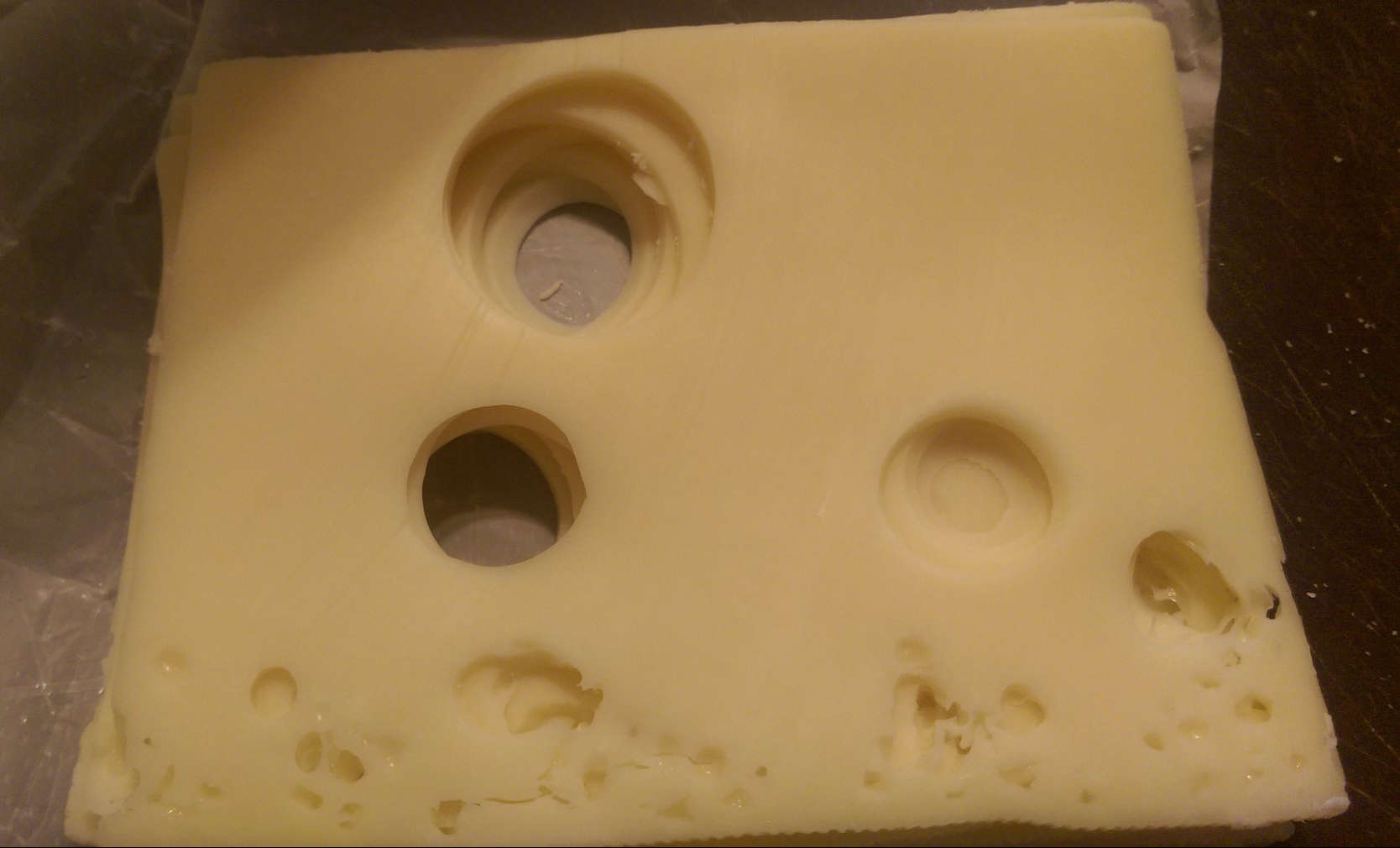
Stack of Swiss cheese slices showing holes lined up.

A routine mission operation was to stir the oxygen tanks during the flight. Unfortunately, due to a Swiss Cheese effect of issues, this nearly proved disastrous when it caused a spark which caused an “explosion” which blew out the tank and ruptured a panel on the Service Module and did further damage. Very quickly the crew found themselves in a craft quickly losing oxygen but more importantly, losing electrical power. Contrary to what some might think, the loss of oxygen wasn’t an immediate concern in terms of breathing or astronaut health. But, without oxygen to run through the fuel cells, it meant there was no electricity. Without electricity, they would soon lose their radio communication to Earth, the onboard computer used for navigation and control of the spacecraft and their ability to fire the engines. Things were quickly getting worse.

I won’t continue to go into details, but through a lot of quick thinking as well as a lot of prior planning, the astronauts made it home safely. The movie Apollo 13, while a somewhat fictionalized account of the mission (for example James Lovell said the argument among the crew never happened, and Ken Mattingly wasn’t at KSC for the launch), it’s actually fairly accurate.

As you may be aware, part of the solution was to use the engine on the Lunar Module to change the trajectory of the combined spacecraft. This was a huge key in saving the mission.

But this leads to two questions that I’ve seen multiple times. The first is why they didn’t try to use the Service Module (SM) engine, since it was far more powerful and had far more fuel and they in theory could have turned around without having to loop around the Moon. This would have saved some days off the mission and gotten the astronauts home sooner.

NASA quickly rejected this idea for a variety of reasons, one was a fairly direct reason: there didn’t appear to be enough electrical power left in the CSM (Command/Service Module) stack to do so. The other though was somewhat indirect. They had no knowledge of the state of the SM engine. There was a fear that any attempt to use it would result in an explosion, destroying the SM and very likely the CM, or at the very least, damaging the heatshield on the CM and with a bad heatshield that would mean a dead crew. So, NASA decided to loop around the Moon using the LM descent engine, a longer, but far less risky maneuver.

Another question that has come up was why they didn’t eject the now dead and deadweight, SM. This would have meant less mass, and arguably been easier for the LM to handle. Again, the answer is because of the heatshield. NASA had no data on how the heatshield on the CM would hold up after being exposed to the cold of space for days and feared it could develop cracks. It had been designed to be protected by the SM on the flight to and from the Moon. So, it stayed.

The overriding argument here was “don’t risk making things worse.” Personally, my guess is given the way things were, firing the main engine on the SM probably would have worked. And exposing the heatshield to space probably would have been fine (since it was so overspecced to begin with). BUT, why take the risk when they had known safer options? Convenience is generally a poor argument against potentially catastrophic outcomes.

So, in theory, these days it’s trivial to upgrade a MBR disk to a GPT one. But, if something goes wrong, or that’s not really the root cause of my issues, I end up going from a crippled, but working server to a dead server I have to rebuild from scratch. Fortunately, I have options (including now a new disk so I can essentially mirror the one disk, have an exact copy and try the MBR->GPT solution on that one) but they may take another day or two to implement.

And in the same vein, if it’s a known SQL Server, or an unknown one, you’re working on, PLEASE make backups before you make changes, especially anything dramatic that risks data loss. (and I’ll add a side note, if you can, avoid restarting SQL Server when diagnosing issues, you lose a LOT of valuable information in the DMV tables.

So things CAN get worse. But that doesn’t mean there’s any need to take steps that will. Be cautious. Have a backout plan.