Thanksgiving 2021

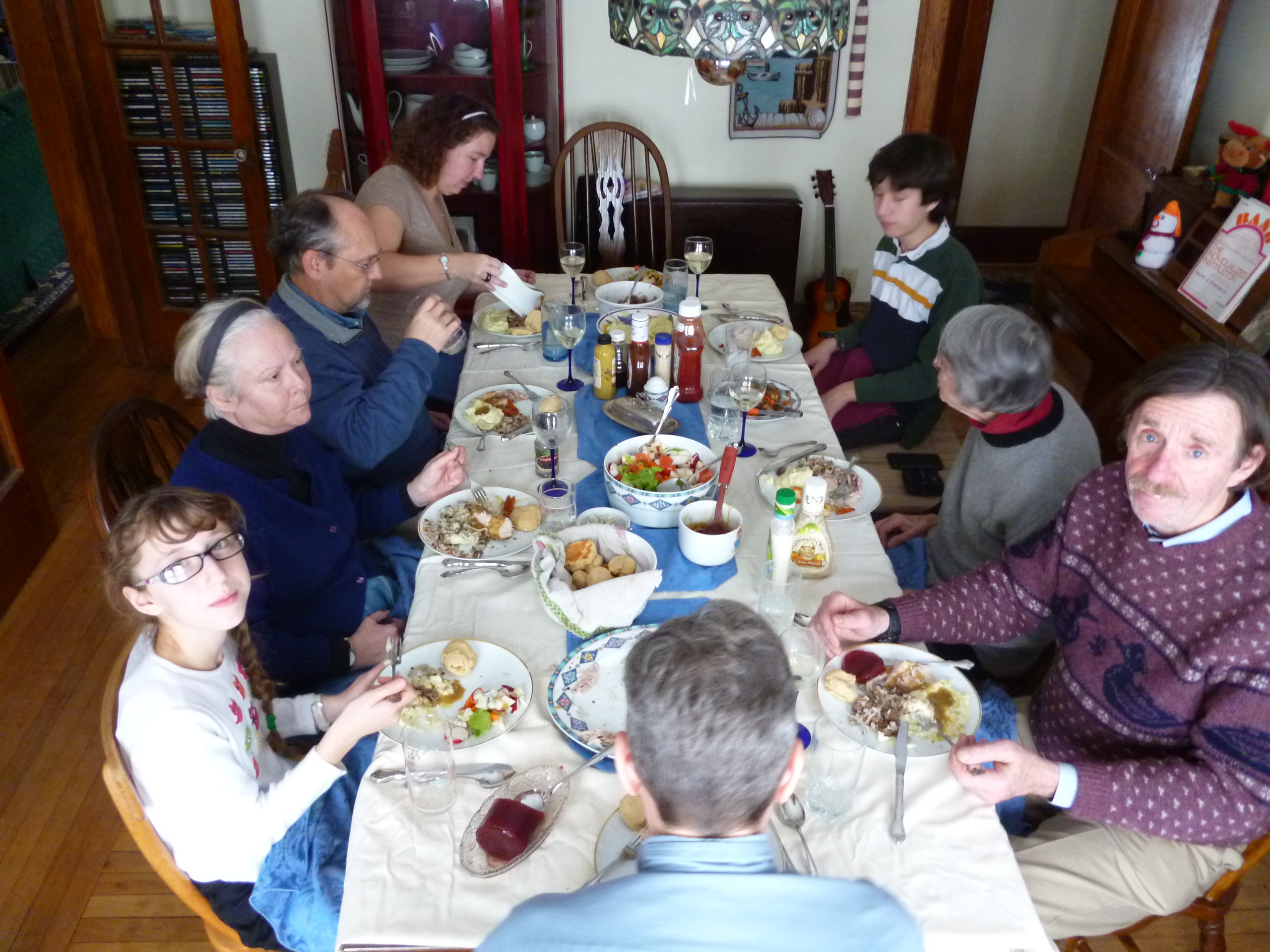
One of the holidays I’ve really come to enjoy over the years has been Thanksgiving. It’s also perhaps the one that has varied the most in my life. One of my earliest memories of it was when my parents were still married (I believe) and spending part of the afternoon playing some tag football with some friends the next street over in Falls Village. (Part of the reason that day was so memorable was the inadvertent discovery of some dog crap after sliding through it!)

After my parents divorced, typically my father and I would go to my paternal grandmother’s house in New Haven and then go out to dinner. She never cooked, for a variety of reasons, including the fact that her kitchen was rather cramped. I recall one year having to shovel out her driveway so we could get back out. Her house was a converted carriage barn at the bottom of a hill in the Westville part of New Haven.

We did this tradition for as long as she lived. But once she passed I decided to take up the tradition by doing it, first at our apartment in Troy, and then later our house. Over the years various friends and members of the family have joined us.

Thanksgiving 2014

While in college, I also did a few early-bird Thanksgivings with a couple of the groups I was involved with. One literally was an “early-bird” where it turns out the students responsible for cooking one of the two turkeys didn’t thaw it first and brought it to the event in a half-raw state. Fortunately my mom caught it in time, mentioned it to Dean Dave and we sidelined that turkey! Thankfully the second turkey was properly cooked and we could enjoy that and the other sides and desserts, including the apple pie I brought.

At some point my dad, who was never much of a cook himself, but enjoyed spending time with his family, suggested we start rotating it from year to year. He went so far as to buy a gas stove (haven gotten rid of the wood-fired kitchen stove well over a decade previously) just to have a place to cook the turkey. I suspect it’s the only time of the year the stove got use. Part of the tradition while driving there, at least for me, included tuning the radio until I could find at least one station that was playing Alice’s Restaurant (that’s the name of the song, not the restaurant of course). One year, we even took a very slight detour and took some photos of the family standing outside of a particular former church in West Stockbridge. (I should note, somewhere in the dirt bike race scene my father has me nestled in his CPO jacket while he’s standing next to my mom. Both were extras, as I suppose was I.)

We also would then on the third year, go to his half-sister’s house outside of Boston where she would host. One one hand I missed hosting every year, on the other hand it gave me a chance to enjoy someone else’s efforts. Unfortunately, this tri-yearly rotation did not last overly long. I think we got in two dinners at my father’s before 2015 when he passed away.

Since then, while we’ve enjoyed a few thanksgivings at my Aunt’s, both last year and this year have conspired to prevent us from gathering with here. Last year it was strictly due to Covid and this year, to other health issues. It’s frustrating as we’d love to see her again.

My Dad and my Aunt Thanksgiving 2013 in Boston

So, on Thanksgiving, I will miss my father and my aunt. But both kids are home from college, my mother will be joining us (since her mother passed several years ago, she’s started doing Thanksgiving at our house when it’s held here) and perhaps a few others.

I’ll watch the Macy’s parade while preparing the turkey and fixings and catch part of the Great American Dog Show.

We’ll go around the table before digging in and each give thanks for something in the last year. I think it’ll be easier this year than last year when the days were darker, not only because of the angle of the Sun, but also the general temper of the year.

And then, at some point, later that evening, probably around 8:00 PM, I’ll go to the fridge, carve off some leftover turkey, grab some mayonnaise, a dash of salt and bread and make myself a turkey sandwich.

Thanksgiving 2011

No matter where you are, or who you are with, I wish you all a Happy Thanksgiving. And here’s looking forward to 2022.

Impact and Legacy

One of my favorite movies for many reasons is Dead Poet’s Society. Robin Williams is excellent in this role. Shortly after his death, Apple repurposed a short segment that I’ve always loved where he quotes my favorite poet, Walt Whitman: What will your verse be?

“That the powerful play goes on, and you may contribute a verse.” – Walt Whitman.

I’ve been thinking more about my legacy and the legacy of others and this week seemed a good time to muse on that. This is the week that in the past many of us would travel to Seattle (or in years before my time, other cities) and gather at PASS SQL Summit. This year things area bit different, but Pass Data Community Summit is happening, albeit remotely. Though at times like this, I can’t but help think of and riff on a line from the Passover Seder, “Perhaps next year in Seattle.” So in any case #SQLFamily is on my mind. And here’s my thoughts on the impact of some individuals.

Let me start with saying this is FAR from a comprehensive list of the people who have had an impact on me. If I didn’t name you, that’s more an oversight on my part and please don’t take it as a slight. And there’s really very little order to this.

Grant Fritchey – I’m sure I remember my meeting with Grant better than he remembers meeting me (is oft the case when a presenter or instructor teaches so many) but it was at a SQL Saturday in Boston where I first heard him speak, in this case on HIPAA. From there I learned not only more about SQL but about #SQLFamily itself and how important this community truly was.

Rie Irish – I want to say it was a SQL Saturday in Philadelphia, but I could be wrong. I was one of two men in her talk  Let Her Finish: Supporting Women’s Voices in Technology. Turns out the other was a friend she had asked to attend. I still wish more men had attended, it’s still a great topic. Rie has helped me be more aware of diversity issues in this community and called me out at least once or twice when I needed it. She’ll be speaking at my user group in a few months and can’t wait.

Andy Mallon – There’s just something infectious about being around Andy that no matter what my mood makes me want to smile.

Bob Ward – Despite him being a Dallas Cowboys fan, he’s an all-around good guy. More seriously, despite how hard he works for Microsoft, he always takes time out to speak to the community and I’ve been honored to have him speak at my local User Group more than once. And despite the general advice to “not type during a demo” he’s brave enough (or crazy enough) to pull out the debugger and debug SQL Server live!

Kathi Kellenberger aka Aunt Kathi – At my first Summit I attended a talk by her on writing a book. What a long strange trip it’s been since then. I wrote my first book and numerous articles for Redgate since then. And yes, I did say first book. I have ideas for others.

Jen and Sean McGowan – Not only have I spent plenty of time on their coach in their booth at Summit, I still find Sean’s class on regexp usage in SSMS, especially for find and replace to be one of the more useful technical skills I’ve learned that arguably isn’t really T-SQL specific.

Tracy Boggiano – For being their during Covid and for making me more aware of mental health issues. And I’m proud to say I’ve got her first ever signature on a book she co-authored with Grant Fritchey!

David Klee – My go to man on certain subjects who knows more about VMWare tuning than I’ll ever hope, let alone want to know. His current Twitter profile picture is a bit misleading, as it suggests a rather sedate, mild-mannered person, but the reality is there’s a mischievous streak there.

Deborah Melkin – I first saw her speak at our Albany SQL Saturday and was immediately impressed, especially as it was her first SQL Saturday. I immediately cornered her and didn’t so much ask as told her to prepare a topic to present to our user group. She happily obliged. One of the aspects I really like about her presentations is she can take a topic that may appear to be a 100 level topic, but still have something new to teach to experienced DBAs.

Andy Yun – I of course now can’t mention Deborah without bringing up Andy’s name. We first met at a SQL Saturday Chicago where I had a blast. At the time it was my most western SQL Saturday gig (since surpassed by two in Colorado Springs). Always helpful and just fun to be around.

Steve Jones – If nothing else, his Daily Coping Blog posts have been a light in my day (even I only skim them). That said, I honestly, don’t know how he gets time to write so much AND do actual work!

Hamish Watson – Despite being literally half a world away, great fun to be around and has shared his great chocolate me, and for that alone he gets a mention.

There are so many more folks that have had an impact: Monica Rathbun, Chris Bell and Gigi Bell, Andy Levy, John Morehouse, Matt Gordon, Kimberly Tripp, and so many more. If I’ve left a name off, I apologize. Honestly, there are dozens of members of the #SQLFamily that have had an impact on me. The only folks I’m not intentionally naming are folks local to me, simply because I want to focus on the larger, worldwide community as a whole. The folks local to me hopefully already know how important they are.

In years past, I’d be looking forward to seeing many of them in person at Summit, but this year the best I can do is perhaps see them virtually and remember them this way.

You may notice a theme too: the impact hasn’t always been directly database related. While it’s true I’ve learned some great database tips from everyone above, their impact has been larger than that. And all of the above folks are more than simply folks who “work on the Microsoft Data Platform”. They’re folks who have lives outside of that. Some rock-climb, some run up buildings, some love to cook, others love to bake, others love to work on their houses, or love to talk about their dogs or cats. And I care about all of them

They’ve each introduced a verse (or more) into the powerful play of both #SQLFamily and to my life. And I’m eternally grateful. Thank you.

Feeling Older

This is probably far from the last time I’m going to write on the subject, and certainly not as in depth as I plan to someday, but this past week made me feel past my prime.

While in many ways I believe age is just a number, the truth is, it does change us. While I am still very active, such as biking a century ride last year, still caving and teaching cave rescue, the reality is, the body and mind are slowing.

I’ve been working with SQL Server in one form or another since 4.21. I’ve spoken at PASS Summit, I’ve presented at more SQL Saturdays and User Groups than I can remember. I’ve published a book and numerous Red Gate articles and I’ve mentored more than a few people over the decades. I’ve worked at two start-ups (not counting mergers and acquisitions) and been a consultant before, between and after those gigs.

So I think I can safely say I’m comfortable with my credentials.

That said, the past week really made me consider if it was time to hang up my cap, or at least change caps again. I won’t go into details, other than to say a particularly stressful project for one of my clients reached a major milestone. I’m actually just one small cog in a much bigger piece of the project, but it’s a fairly important cog. And, it had issues. Now, I’ll put on my shoulders that a bit was due to issues with my code and some assumptions I had made. Most of the issues actually stemmed at a far higher level and with another consultant agency working on the project. Let’s just say that GIGO still thrives. But some of it I realized was, I was slightly off my game, and I think a bit of brain fog was involved. I don’t know if that was age related, simply a result of being cooped up for well over the last year due to Covid or what.

Regardless, the culmination of all that and other issues, some personal, started to come to a head. By Friday I was seriously wondering how much more I had left in the tank, physically and mentally.

Today I will admit I’m in a better place. The last major piece of code I needed to get working finally succeeded in production last night and the GIGO problems seem to be disappearing.

But that was after a long weekend of introspection about where I’m headed. I am at that age where retirement is no longer some far off nebulous goal, but an actual reality I have to consider. I’ve always known I’ll probably never truly retire; I do enjoy being busy and working too much. However, I have for several years now done the delicate balance between making sure I hit certain target goals for income and actually enjoying my work. Last week that balance was way off. I need to get it back.

This is my long-winded way of saying that for the first time in years, I’m honestly not sure what I’ll be doing a year from now. Perhaps I’ll still be consulting in my current form and enjoying it. Perhaps I’ll go back to a full-time 9-5 gig; I have come to realize, I deeply miss the management side of work. For my two stints as a full-time employee I was a manager and honestly, I loved that. I miss it. Perhaps I’ll be consulting in a very different way going forward. Maybe I’ll invest in real-estate. Perhaps become a vagabond teaching cave rescue across the country (this last one is not as far fetched as it sounds, I am planning on teaching at least 2 if not 3 different classes next year.)

But I think change is coming again. It’s the season.

Extruding Keratin

I have been thinking about getting a 3D printer for awhile and even briefly looked at getting one during the height of the pandemic last year. Then a meme on Facebook made me laugh and got me thinking. It was a graphic of Skeletor saying how your head is simply 3D printing hair. I pointed out that fingers are doing the same thing.

And as most will probably recall from high school, hair and nails are basically both keratin so it’s the same basic thing, just in a slightly different form.

First, I have to say, I find it amazing and wonderful on how conservative nature really is in the form of evolution. It really makes a lot of sense when one things about it. Once a basic structural protein has evolved, it’s probably easier making certain tweaks to it that are good enough for other uses than expecting something completely new to evolve. Hair and nails fill very different functions, but adapting keratin structures for each use works well enough.

Perhaps one can think of evolution as a bit object oriented and keratin is the base object and nail and hair are simply inheriting its features and deriving new classes.

Anyway, as a side effect of all this, humans especially have, pretty much as far back as we can look, modified hair and nails. It’s one way we distinguish ourselves from each other.

Head Hair

In my personal life I’ve both paid a lot of attention to my own hair grooming habits and very little. In ways I’ve experimented with its length and style over the decades. My grandfather apparently had very strict ideas on hair length and was known to give money to bagboys at the supermarket if he spied long hair and would tell them to get a hair cut. I don’t think he’d have approved of most of my hair experiments.

In high school, we had a dress code that wasn’t overly strict, basically it was boys hair could not be longer than “lightly touching the shirt collar.” That was fine for me. Beyond that, I probably didn’t pay much more attention to my hair than that. A few years later I met a fellow graduate (he was probably 6 years behind me) that had a mohawk that he had maintained while attending the same high school. He pointed out that when spiked out, it was no where near his collar and when it wasn’t, it flopped over and was still just lightly touching the collar. I have to applaud him for both following the letter of the rule, and completely flaunting expectations.

Back in the 90s when the original version of MacGyver was popular, mullets came into being. I’ll admit to being a fan of MacGyver for many reasons and it may or may not have influenced my hair style for a bit. Later I grew a bit of a rat-tail. I liked it for a number of reasons. Strangely, I found it sort of helped me as a consultant. I could dress in business casual, and look serious when meeting a client, but then they’d notice I had a bit of the look they expected from a computer geek. I’ll admit too, I didn’t mind the attraction some women found for it.

But, as I got a bit older, and honestly, as the gray started to appear, I decided I had to either grow out all my hair and go with the 60s hippy look (something I probably could have pulled off honestly, and had the family history for) or trim it. And so trim it I did. Since then, until recently I’d go in for the obligatory hair cut, but that was about it. At first I didn’t really care who cut my hair. I’d go to a place, take the first open chair and let them go to work. That stopped after one stylist kept butchering my hair shorter and shorter trying to fix the mistakes she kept making. I got up, paid and walked out.

Then while working in DC I happened to find a stylist I liked and would wait for her to cut my hair. Once back home, it took me a while to find another one I liked. She eventually moved but recommended someone else, who I liked. Then Covid hit.

At first I just let me hair grow, but finally it started to annoy me enough I ended up joining the crowd and buying a set of clippers with attachments. Now, I cut my own hair on a more regular basis than I did before Covid and according to my wife, I’m getting pretty good at it. She still helps me trim the very back but that’s about it.

Beard

In the summer between my Freshman and Sophomore years of college, I went on a road trip with a college friend. He had a full beard. We both shaved the day before we left. Three weeks later we arrived home. It looked like he hadn’t shaved. My dad’s only comment (who was bearded) was “Oh, trying to grow a beard?” It was evident then and for decades later that any beard growth for me would be an exercise in either futility or patience.

But Covid changed that. Sometime last year I decided though to give up shaving. No real reason other than, “Hey it’s Covid, why not?” And since I wasn’t going to be seeing clients, visiting people, etc. I could take my time. Though in some ways too it was very much an experiment, “let’s see what can happen?” This time the beard took. Again I’ve played with lengths. At the longest, it was probably an inch long and very fuzzy. I sort of liked it, but my wife wasn’t and I also felt I wanted something that looked less “mountain man” and a bit more professional. So now I keep it trimmed fairly close and like that even more. That said, I suspect sometime in the next year or two it’ll finally go. It may make reappearances later in my life.

I started this post talking about a meme and evolution, but it’s grown. Funny that. And it’s down done growing.

Nails

One last bit though. I also mentioned nails. I suppose one could say over the past few months I’ve done some experimenting with those. At least the ones on my left hand. I’ve often had a slightly longer pinky nail, useful if only for a deep satisfying scratch or the like. But this time I’ve let all of them grow and well it’s been interesting. The pinky, because it had a head start is visibly longer. The others, from the backside, just now peaking over the pads of my fingers.

And, I’ve learned a lot:

  • For example, within the past few days, removing contacts has become a bit trickier given the way I’ve done it. I have to be very careful to make sure only the pads of my fingers are there, and I don’t scrape the cornea with my nails. (I thought I had a few days ago. That’s a hard thought to fall asleep to. Trust me.
  • Scratching myself definitely gives different feelings between the right (trimmed) and left hands.
  • Typing is a tad different.
  • Putting on an oven mitt was a surprising difference, at least with the extra-long pinky nail. Hard to describe, but I can’t pull it on quite as far and as a result gripping stuff is a bit different.
  • I find in general, with my left hand I have to be a bit more dainty in my usage, both to protect the nails and in some cases to protect what I’m handling (see contacts above).

As I was musing on what to write this week, that thought above really ran through my head; in two ways. The first being how the longer nails, even at this fairly short length, has impacted hand movements. But also on the adjective. At first I was going to say something like feminine, but realized that wasn’t accurate. I think it’s mostly because at this point in society, while we may associate long nails with being a feminine quality, there’s nothing inherently feminine about them. Men and women, cis or trans can obviously grow them. They are much like hair in this aspect. For years, as my grandfather seemed to believe, men had short hair and women had long (his wife, my grandmother had gorgeous red hair that cascaded down her back). But again this is simply a cultural norm, not an inherent characteristic. We look back at Samson with long hair and it was considered a sign of virility. And in 20th century America, women wearing short hair has also become acceptable. So obviously hair length itself doesn’t have a feminine or masculine inherent characteristic.

Conclusion

We assign to many things characteristics that are not an inherent part of them. Fortunately, in my mind society is getting better about this, though there are still far too many people that insist that their definitions are an inherent truth.

As for me, my head hair, I’ll probably keep cutting myself when it gets long enough to annoy me, the beard will stay until it doesn’t and the nails, we’ll see. Who knows, maybe I’ll paint them once before I trim them, or maybe I’ll simply cut to trimming them. It’s been an interesting experiment, and I’ve enjoyed it, but also not something I’m necessarily huge on keeping. But that’s ok. It’s my body and I’ll do what I want.

But I think if it weren’t for Covid, I might not have experimented like I did above. Both age, and the time of being away from people, has given me a little more confidence to explore, both my own expectations of my body and presentation and just in general. It’s one of the few good things to come out of Covid for me.

Inbound and Outbound to NYC

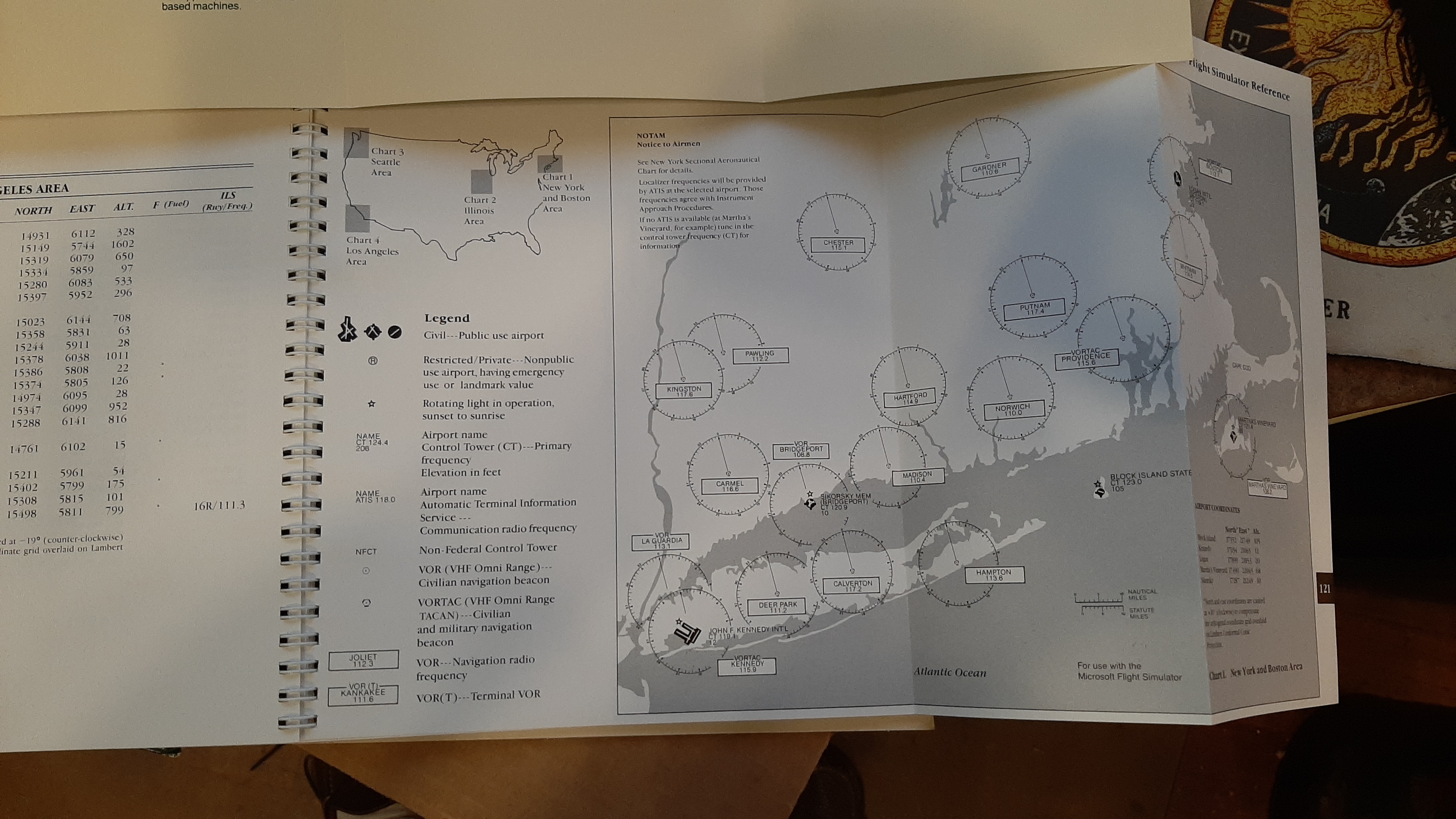
I still recall the first computer program I wrote. Or rather co-wrote. It was a rather simple program, in Fortran I believe, though that’s really an educated guess. I don’t have a copy of it. It was either in 7th or 8th grade when several of us were given an opportunity to go down to the local high-school and learn a bit about the computer that they had there. I honestly have NO idea what kind of computer it was, perhaps a PDP-9 or PDP-11. We were asked for ideas on what to program and the instructor quickly ruled out our suggestion of printing all numbers from 1 to 1 Million. He made us estimate how much paper that would take.

So instead we wrote a program to convert temperature Fahrenheit to Celsius. The program was as I recall a few feet long. “A few feet long? What are you talking about Greg?” No, this was not the printout. This wasn’t how much it scrolled on the screen. Instead it was the length of the yellow (as I recall) paper tape that contained it. The paper tape had holes punched into it that could be read by a reader. You’d write your program on one machine, and then take it over to the computer and feed it into the reader and it would run it. I honestly don’t recall how we entered the values to be converted, if it was already on the tape or through some other interface. In any case, I loved it and fell in love with computers then. Unfortunately, somewhere over the years, that paper tape has since disappeared. That saddens me. It’s a memento I wish I still had it.

In four or five short years, the world was changing and quickly. The IBM PC had been released while I was in high school and I went from playing a text adventure game called CIA on a TRS-80 Model II to programming in UCSD Pascal on an original IBM PC. (I should note that this was my first encounter with the concept of a virtual machine and p-code machine.) This was great, but I still wanted more. Somewhere along the line I encountered a copy of Microsoft’s Flight Simulator. I loved it. In January of 1985 my dad took me on a vacation to St. Croix USVI. Our first step on that trip was a night in NYC before we caught our flight the next morning. To kill some time I stepped into 47th Street Photo and bought myself a copy of Flight Simulator. It was the first software I ever bought with my own money. (My best friend Peter Goodrich and I had previously acquired a legal copy of DOS 2.0, but “shared” it. Ok, not entirely legal, but hey, we were young.)

I still have the receipt.

For a High School Student in the 80s, this wasn’t cheap. But it was worth it!

I was reminded of this the other day when talking with some old buddies that I had met when the Usenet sci.space.policy was still the place to go for the latest and greatest discussions on space programs. We were discussing our early intro to computers and the like.

I haven’t played this version in years, and honestly, am not entirely sure I have the hardware any more that could. For one thing, this version as I recall was designed around the 4.77Mhz speed of the original IBM PC. This is one reason that some of my readers may recall when the PC AT clones came out running the 80286 chip running at up to 8Mhz (and faster for some clones) there was often a switch to run the CPU at a slower speed because many games otherwise simply ran twice as fast and as a result the users couldn’t react fast enough. So even if I could find a 5 1/4″ floppy and get my current machine to read the drives in a VM, I’m not sure I could clock down a VM slow enough to play this. But, I may have to do this one of these days. Just for the fun of it.

I still have the original disks and documentation that came with it.

Flying outbound from NYC

A part of me does wonder if this is worth anything more than the memories. But for now, it remains in my collection; along with an original copy of MapInfo that was gifted to me by one of the founders. But that’s a stroll down memory lane for another day.

And then I encountered SQL Server only a short 6 or so years later. And that ultimately has been a big part of where I am today.

Updating My Avatar

A want to thank in part, fellow DBA, Cathrine Wilhelmsen for the topic today. She posted a tweet this morning asking we all look like our Twitter profile pictures when we meet again at in-person events. I replied that I wasn’t sure I was ready to shave my beard. So, instead, in the meantime, I updated my avatar on Twitter photo to my latest headshot, which does include a beard. I figure I can always shave it and update my photo later.

I was at a loss for a topic today until that tweet came in and then a request from Adam Hafner came in reminding me to send him an updated bio for my upcoming talk at his User Group in Sioux Falls later this month.

Between these two events, it was another reminder of how much as changed in the last 18 or so months and how much will change again in the next 18 months. For example, I signed up to do an in-person User Group presentation next May for the Hampton Roads SQL Server User Group.

The beard is perhaps my most obvious change. But I’ve also come to realize how much I miss my #SQLFamily. I’ve been fortunate in the past 18 months to teach two in-person cave rescue classes and still avoid Covid. And yet, I missed travelling. I miss getting out. Last month my wife and I drove our out to Buffalo to help my son move into his apartment for his final semester of college. That’s the furthest I’ve been from home in 18 months. Other than teaching the cave rescue courses about 30 miles away, I don’t think I’ve slept under another roof in all that time. This is unusual for me.

I had even stopped doing remote SQL presentations. My writing for Redgate dropped off (though I just had a new article published, check it out here!)

But, that’s all starting to slowly change. I can feel the winds shifting and I think next year will be a great year for travel and I’m excited about it.

And, I may or may not have a beard. Hopefully you’ll recognize me. And I hope I recognize you.

The World Wonders

I mentioned recently that I had picked up a copy of the book The Last Stand of the Tin Can Sailors. I just finished it and would highly recommend it. The author, James Hornfischer does an excellent job of interweaving the fates of the ships and their crews over the course of several chapters. There’s an excellent sense of the fear and sense of duty among the sailors. He also includes several maps to help one orient themselves as they read about the battle unfolding. He appears to have done his research, which includes numerous interviews with the survivors, reading of the ships logs and more. The one area of missing information, and he admits it, is an adequate understanding of the Japanese side of the battle. This appears in part to be due to a lack of access to such logs and I suspect a language barrier and the difficulty of travelling to Japan.

I mention this because it’s important to understand that the story he writes, nearly 60 years after the battle gives a far fuller picture of what happened than any of the participants had that day. But even now that story is missing pieces.

To quickly recap, the Imperial Japanese Navy was given the mission of breaking up MacArthur’s landings on Leyte in order to reclaim the Philippines. Like many Japanese naval plans it was audacious but also required meticulous planning and timing. And it involved a decoy fleet. This is an important element to what precipitated the last stand. At this point in the war (late 1944), the Japanese Navy had few planes and few experienced pilots, so their aircraft carriers were not an effective force. This despite the fact that the Japanese had shown at Pearl Harbor that the future of surface naval warfare was almost exclusively to be done via aircraft. So they decided to use their aircraft carriers as bait for the Third Fleet commanded by Admiral Halsey. A bait he took; hook, line and sinker.

This left the northern edge of the Seventh Fleet, guarding the San Bernardino Strait basically undefended except for 3 task forces, Taffies 1-3, with just a slew of “jeep” carriers and destroyers and destroyer escorts. Taffy 3 was the northernmost of these and the ones directly engaged by the Japanese fleet. They were soon to be met be the IJN Yamato and and the rest of Admiral Kurita’s fleet of battleships and cruisers. By any measure, Taffy 3 was outgunned and outmatched. Yet, by the end of the day, despite the loss of 2 destroyers, 1 destroyer escort, and 2 escort carriers, the Japanese fleet had lost 3 heavy cruisers, 3 more damaged, a destroyer damaged and the loss of 52 aircraft (compared to the US losing 23) and was in full retreat.

At this point, and for the last 77 years one could reasonably ask, “why?” What drove Admiral Kurita’s decision to withdraw. Unfortunately, most of the answers are predicated on guesswork, educated guesswork, but still guesswork all the same. The simple answer appears to be two fold. For one, he didn’t know if Admiral Halsey had taken the bait, and in fact it appears that he didn’t think Halsey had, and that he was in fact attacking the fleet carriers, not escort carriers, and hence a much larger American fleet than was actually present. But despite his erroneous belief about the American Third Fleet’s position, he was most likely correct in his appraisal of the future of the mission: he did not believe he could continue forward and disrupt the landings. Since that was the primary goal of his mission and it most likely would fail, it appears he saw no point in risking the rest of his fleet and withdrew.

One can speculate what would have happened had he continued on with the battle. My personal, and mostly uneducated guess, is that he probably would have succeeded in sinking the other 2 carriers of Taffy 3 and perhaps the rest of the destroyers and destroyer escorts. However, his position was extremely precarious with the growing number of American aircraft starting to make sorties from Taffy 2 and from an improvised airstrip the Army had prepared and the pilots from Taffy 3 had basically taken over. It’s most likely he would have ended up with several more of his own ships on the ocean floor, including the Yamato.

So, he made what he thought was the best decision based on the information he had at the time. As did Halsey when he took the bait of the Northern Force of the basically defanged Japanese carriers.

So why do I recap all of this? Because I think it’s topical to a lot of what we do at times. This past weekend I was upgrading a SQL Server for a customer. Fairly routine work. And I ran into problems. Things I wasn’t expecting. It threw me off. Fortunately I was able to work around the issues, but it got me thinking about other upgrades and projects I’ve done.

The reality is, in IT (as well as life) we make plans to get things done. Sometimes they’re well thought out plans with lots of research done prior to the plan and everything is written down in detail to make sure nothing is forgotten.

And then… something unexpected happens. The local internet glitches. It turns out there’s a patch missing you had been told was there. Or there’s a patch there you didn’t know was there. Or a manager unexpectedly powers down the server during your data center move without telling you (yes, that happened to me once).

When things go majorly wrong, we’ll do a post-mortem. We’ll look back and say “Oh, that’s where things went wrong.” But we have to remind ourselves, at the time, we didn’t know better. We may not have had all the information on hand. When reviewing decisions, one has to separate “what do we know now” from “what did they know then.”

Now we know, “…Halsey acted stupidly” to quote a famous movie. He shouldn’t have taken the bait. We know Kurita probably should have turned back earlier (since the other half of the pincer had been turned back by the Seventh Fleet, putting the Japanese plan in serious jeopardy, or perhaps pressed on a bit longer before turning back (and taking out a few more escort carriers). But we shouldn’t judge their decisions based on what we know, but only on what they knew then.

Finally, I’m going to end with a quote from the battle. Spoken by Lieutenant Commander Robert W. Copeland of the USS Samuel B. Roberts (DE-413) to his crew over the 1MC “This will be a fight against overwhelming odds from which survival cannot be expected. We will do what damage we can.” And that they did. Among other things they launched their torpedoes at the IJN heavy cruiser Chōkai, hitting and disabling it and then took on another Japanese cruiser with their 5″ guns until finally a shell took out their remaining engine room and they ended up dead in the water.

I can’t begin to fathom the heroism and bravery of the men of Taffy 3 that day. If you can, find the time to get a copy of the book and to read it.

P.S. The title of this post has an interesting story of its own, and I know at least one reader will know it all to well.

ICE ICE Baby

I rarely like to make predictions or bold claims, but dawned on me that it’s pretty much all over for the Internal Combustion Engine cars and trucks. Forget government mandates or the latest Tesla press release.

Why do I say this? a few months ago I recall reading the press release for the new F-150 electric truck. The stats made for some impressive reading. And more interestingly, if anything, it appeared Ford downplayed some numbers like range (i.e. giving a conservative estimate based on actual usage as opposed an optimal number based on unrealistic driving conditions). They announced an initial set of production numbers and a few weeks later doubled their 2024 production estimates. The Ford F-150 has been the best selling vehicle in the US since 1981. Announcing an electric version was no small thing. And people took to it like a duck to water.

But that wasn’t the thing that convinced me. It was the ad I saw tonight. I can’t find a link to the latest but it features the F-150 Lightning, the E-Transit, an electric version of their best selling van and the Mustang Mach-E. This is a wide range of vehicles and it’s clear that they’re not targeting niche vehicles or make a pro forma attempt. They mean business.

They know where the market is heading and it’s electric. The market has spoken and the future is electric. Mandates and the like won’t matter.

Time Flies

It was either only 20 years ago or a lifetime ago that I had received the news. Peter was on Flight 175. That’s all I needed to hear. That was all anyone who knew anyone on any of the 4 flights needed to hear. There was no hope, no questions that followed. My best friend from high school had been killed because a man in a far away land had hatched a plan to turn four airliners into deadly missiles.

I have to be honest, Peter and I hadn’t really kept in touch after high school. I can’t really say why. But I had finally reached out to him a few weeks before 9/11 and we had made plans to get together in the next month. That moment, like all my memories of him is now frozen in time. His smile that lit up a room will always be in my mind.

On this 20th anniversary, I have mixed feelings on how much 9/11 has been played out as a national tragedy for most of the last 20 years. It was no doubt a horrible day for many. Friends and family were lost that day. And yet, it seems to have taken a special hold in our national consciousness for two decades. Like Pearl Harbor, the attack was a complete surprise and caused the US to launch a war overseas. But unlike Pearl Harbor, it seems as if at times we are stuck in time. I think this is perhaps because in this case, our own planes and passengers were turned on us and because unlike WWII, there has been no distinct victory. There is no simple closure. But, thanks to people like Peter’s family, there is hope.

It was tempting for many after 9/11 to want revenge, to strike back. Some I think lost the distinction between justice and vengeance. Peter’s family did something different and I think unique. And that has been what has been on my mind.

In their own way, and a way that the Peter I knew from high school would have approved of 100%, they struck back at the Taliban. They didn’t go on the warpath. They didn’t call for attacks or bombings or even deaths in return. Instead, they opened a school for girls in Afghanistan. They setup a scholarship program for students from Afghanistan to attend the private high school, Berkshire, where Peter and I met. They decided to fight hatred and ignorance with lovingkindness and education. They fought for a future. Peter was gone, but they fought for a better world, despite him not being in it.

As the Taliban slowly regained control of parts of Afghanistan over the past years and especially the past months, I was saddened. With the fall of Kabul, I was nearly in tears. While I grieve at times for Peter, I grieve more for the dying of the dreams inspired by his murder. And this happening near the 20th anniversary of 9/11 has only made it more poignant.

That said, I actually have hope. I think it’s a dark time in Afghanistan, the current promises of their leader not withstanding. Currently it appears they will continue to allow the education of girls, but I don’t know for how long and how well.

The land, like the country is a harsh environment, but yet things grow. His family and countless others I believe have planted seeds in Afghanistan. Seeds that when the time is right will sprout and grow. So, I have hope. His death may have led to just one school and a few students coming to Berkshire, but I know his family wasn’t alone.

It may take years, perhaps decades, but I think have to believe that Peter’s death was not in vain and that more good will ultimately come of it.

Peter Morgan Goodrich
Peter’s smile as I remember him

More on the foundation setup by his family: The Peter M. Goodrich Memorial Foundation

Paywalled (sorry) recent article on him: The Berkshire Eagle

From his college: Bates

About his mother: a powerhouse of a woman that cancer took far too soon

P.S. One last comment about Peter himself. I think one reason we got along so well was because he was so inquisitive and always learning. At his memorial we were all told how among his possessions was found a copy of an English copy of the Qur’an, replete with many dozens of bookmarks. While we were all looking for solace and understanding the preacher reminded us, “For the love of God, he read the Qur’an.” That was Peter, always wanting to learn and understand. And he would have appreciated the wordplay in that statement.

Time Crawls On

There’s a crevice at the top of a ridge, about 18.5 miles from my house as the crow flies. And as time flies, it’s been in my life for 36 or 37 years.

The crevice is locally known as The Snow Hole because it retains snow late into the year. Decades ago it had snow through August and sometimes beyond. Unfortunately the time for that is long past due the overall temperatures increasing a day or two.

I first visited this in the Spring of ’84 or ’85. I honestly can’t recall which year. As part of the Outdoor Education club or “OE” as we called it in high school, we did an overnight trip. The instructor liked to challenge us and in this particular case we literally arrived at a random parking lot at the base of a ridge and were purposely given a vague map and told to find a particular peak to camp on. With some bushwhacking we made it to the top of the ridge, struck south and arrived at the peak with a gorgeous view. We camped there and then the next day headed north, crossed a road, and eventually arrived at a crack in the ground full of snow. We explored the crack and I’m sure threw a few snowballs at each other. The crack has sheer walls on three sides and a walkable slope on the west side. At the very top of that slope there is a hole in the ground. Alas, no hobbit lived in it, but it was large enough to wiggle into and with some effort find oneself completely underground. It wasn’t much of a cave, but it was there. (Arguably, by some definitions, because one never got beyond what’s known as the twilight zone, it’s not really a cave, but to us, it was a cave.)

We hiked back to the road and in the parking lot there, not the one we started at, we packed up the vehicles and headed home. At the time, I honestly had no clue where we had gone. But I knew it was fun.

It was a couple of years later, I was now in college, when I joined the Rensselaer Outing Club on a day hike to Berlin Mountain. We drove east from campus and arrived at a parking lot. We unloaded and hiked south. I was having a mild sense of deja vu, but I wasn’t sure why. Several miles later, we arrived at the top of Berlin Mountain and I instantly recognized the view. I had camped there. To our east was Mount Greylock, the highest point in Massachusetts. I had returned.

On a later hike, we headed north to the Snowhole. This was the first of many return trips to both locations, the most recent being a hike this past weekend to the Snowhole with my wife.

As we headed north, I was trying to remember my last time there and I want to say close to a decade ago. As I move on in my years and I revisit locations from the past, I try to recall what they were like years ago. In some cases my memories are clouded and faded, in others though, I know my memories are accurate but the places have changed. Both were true on the hike in. In this case, there are two rather open spots about 2/3rds of the way in where one has gorgeous views. Or, more accurately had. The areas themselves are open, but the trees just downhill have continued to grow over the decades and now block much of the view.

View north of Berlin Mountain in the distance, but numerous trees in the foreground blocking much of the view. Taken from the Taconic Crest Trail on the way to the Snowhole.
Decades ago, you could see far more!

And as I mentioned above, the snow doesn’t persist as long in the Snowhole as it used it. But the Snowhole itself hasn’t changed much. Oh, I’m sure a rock or two has fallen since then, more leaves have filled the bottom and decade and I think there’s a bit of a subsistence at the bottom that’s opened up a bit, but overall it’s the same.

And one thing waiting there was that cave. For whatever reason I had not reentered that cave since my first time. This time I decided to do so. I’ve talked about in the past how sometimes we remember caves being bigger than they actually are. Well, in this case I swear the entrance was larger than I remember. I do think in fact the rock had shifted a bit, so perhaps it had been smaller in the past, but in any event, in this case I was able to crawl in without much effort. And the cave itself was deeper and far larger than I recall. Unlike most caves in New York, this is not a solutional cave formed by the breakdown of limestone. Instead, it’s really more of a breakdown cave, where as other stuff erodes away or shifts the layers of rock shift, break, or otherwise move. In my memory, the cave was about 6′ long and just enough to turn around in and peep out a much smaller window near the entrance. Now, it was probably a good 12′-15′ feet long and it dropped down about 6′. Technically I could probably have crawled over a ledge and down just enough to get out of the twilight zone. It truly is a cave, at least now. And it’s one of those rare cases where it’s far larger than I remember. I don’t know in this case if it’s just my memory, or if the cave had changed. It didn’t matter.

After a few minutes I crawled back out and started to do the math. That’s when I realized it had been nearly 40 years since I had last crawled in there. I do hope it’s not another 40 before I crawl in again.